A sensitive Hedda Gabler
Katona József Theatre from Budapest has created an emotionally intense modernization of Ibsen's classic, which shows Hedda's feeling of emptiness and loss of control.
Kallocain at the National Theatre tries to show us how humans are drawn to art and culture.
The experience begins already on the way into the hall. We enter from the floor below and walk through parts of the scenography that we later see more of on screen. It is not so easy to understand what we are seeing, and we never get an answer to that either. But this is somewhat up to me as an audience member to interpret, more on that later.
When we enter the auditorium, we emerge from a hatch in the floor, which is a new and fun way to enter a theater. It's like I'm there for a little while before I take my seat.
The stage design is quite simple and easy to digest. With some chairs and desks with a “futuristic feel” including some curtains and an eye looking out over the stage. But the focus is usually on a screen at the back of the stage. There they use a lot of live camera projection as well as various images. The camera also acts as a link between what is happening on stage and what is happening downstairs.
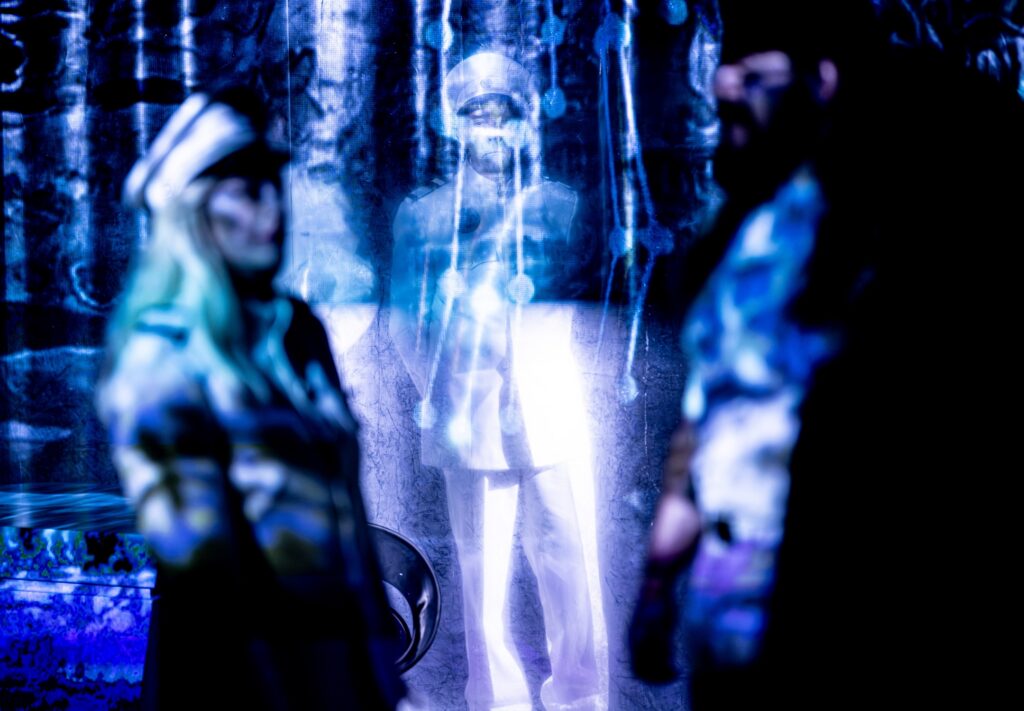
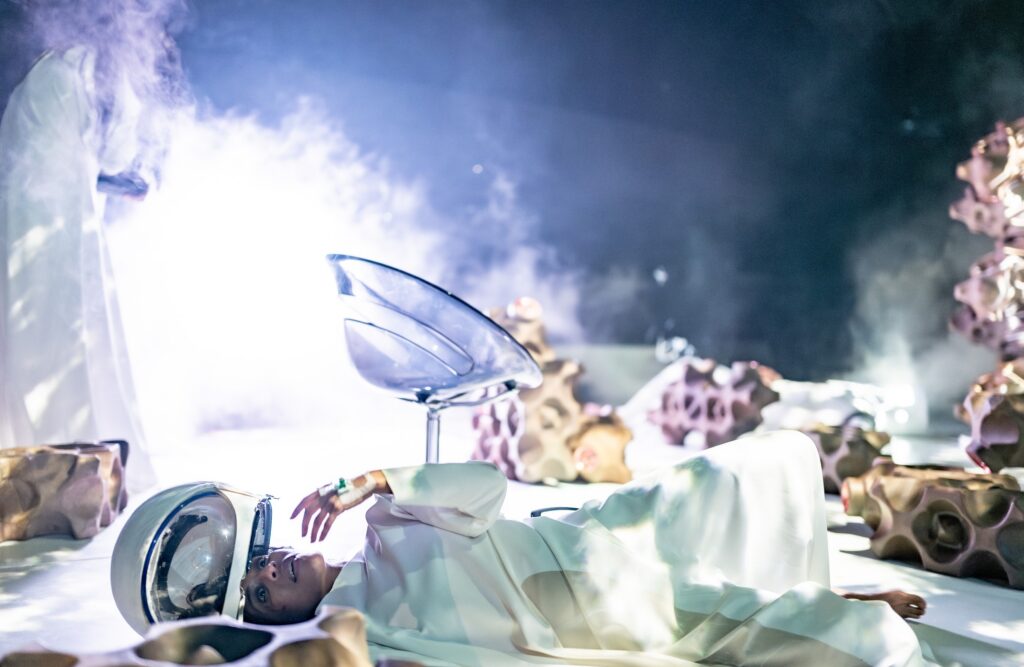
The play is being staged by the performing arts company De Utvalgte . They are based on Karin Boye's book written in 1940. De Utvalgte has shifted its story 100 years into the future, where the world has been destroyed by war and now six people are sent to a space station to colonize space.
These six people are completely unrecognizable at first, they are human, but there is not much human left of them. It seems like everything you could call soul or personality they have lost or has been completely suppressed, or censored. They are being researched and their lives are completely monitored and controlled by some form of AI, and it seems like this is the source of the “censorship” or “suppression”. But eventually, as an experiment, they are going to be allowed to speak freely. This is where I feel like the play starts to take a stand.
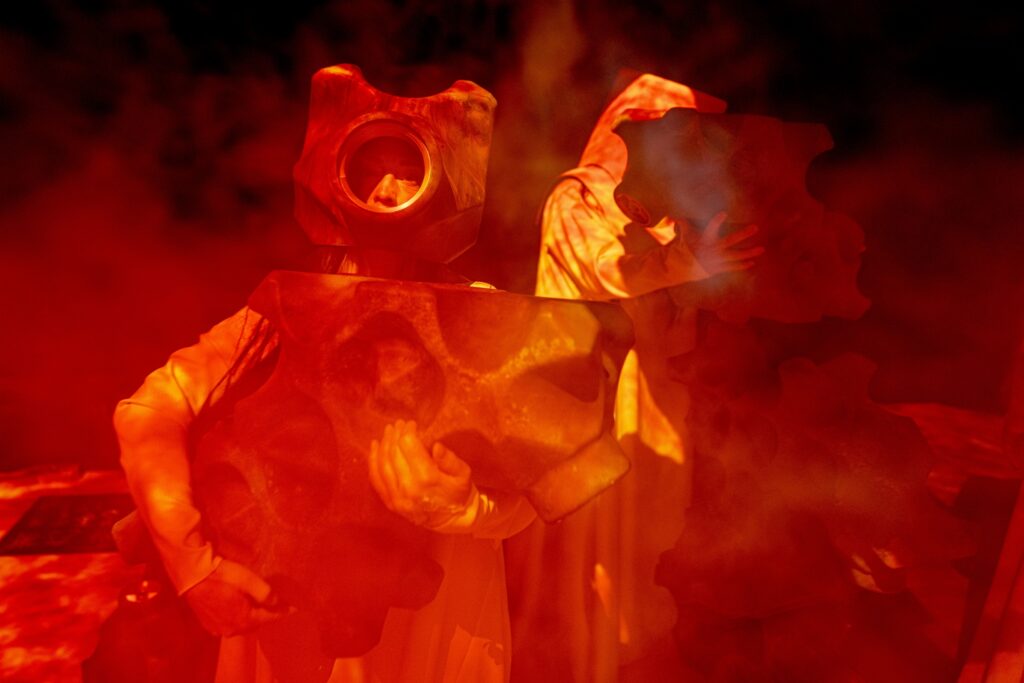
These six people, who have lived under complete censorship and surveillance, are allowed to speak freely and loosely, and begin to talk about language. About how fascinating language is, that words can paint pictures in another person's head. The AI finds this impossible to understand, so it allows people to unfold more. Then the people begin to resort to something similar to old rituals and painting and studying old art. What I want to get across is that the people in this story are allowed to unfold exactly as they want. But they don't know how, they've been monitored for so long. So what they start with is art, in an attempt to understand themselves. Kallocain illuminates how long we've been doing art and why we've been doing it, which I think is really nice. I find that art is no longer as much about questioning and exploring, but that institutional theaters are instead trying to sell tickets and impress an audience. And Kallocain and The Chosen Ones remind us why we have, and should continue to have, art in our society and its function.
In a sort of continuation of that, art is often subjective, and Kallocain is 100% subjective art. Kallocain combines text and visual art in a fun way. There is a lot of text, but not everything is so easy to understand. This makes the text like little hints of the story, while the images and what happens on stage help me interpret further. And Kallocain does that in a really good way. It is a performance that is unlike any other. The characters are researching a space of truth, but what they are trying to find out we never know. But it allows us in the audience to think and connect for ourselves. That is why the performance can live on in our heads.
April 27, 2026
Inspired by a novel by Karin Boye, dramatized by De Utvalgte with contributions from the actors.
Director: Kari Holtan
Scenographer and video designer: Boya Bøckman
Scenographer: Kittil Kittilsen
Costume: Katja Ebbel
Lighting designer: Bjørn Olav Hauknes
Masker: Hege Ramstad, Alvilde Kippersund
Dramaturg: Elin Grindaker, Anne Holtan
With: Selome Emnetu, Ole Johan Skjelbred, Håkon Ramstad, Anneke von der Lippe, Torbjørn Davidsen and John Emil Jørgensrud / Eindride Eidsvold
All photos: Lars Opstad / National Theatre
March 11, 2026