
A sensitive Hedda Gabler
Katona József Theatre from Budapest has created an emotionally intense modernization of Ibsen's classic, which shows Hedda's feeling of emptiness and loss of control.
What is the role of critics in the world of theatre? Aksel August has pondered this throughout Heddadagene – and life in general.
"I'm committed, but I don't shout the loudest"
This is a line that is repeated several times in the performance 15 years at Det Norske Teatret, the performance that we in the Unge stemmer jury voted the best of the Hedda program . Personally, I recognize myself very little; if I am committed, you will hear it. That is one of the reasons why I love writing reviews, it is nice to have an opinion. There was another story from the performance that I recognized a little too well. A young person who chose to fight against the school's ban on snus. He was so committed to this, despite the fact that he did not use snus himself. It was just an outlet to be able to fight for an opinion. Throughout the week, I saw around 10 performances, almost every day more than one, and yet there was nothing I saw that took up more space in my thoughts than this small part of 15 years.
Why did that scene touch me so deeply?
My great role model in criticism is Anton Ego from the Pixar film Ratatouille . He is an old, thin skeleton of a human being. Dark, with glasses far up his nose, he stands cynically and self-absorbed on the doorstep of every respectable restaurant. The scariest thing about him is the immense joy he takes in crushing the poor chefs, who clearly have much more talent than him. He is a perfect caricature of a critic.
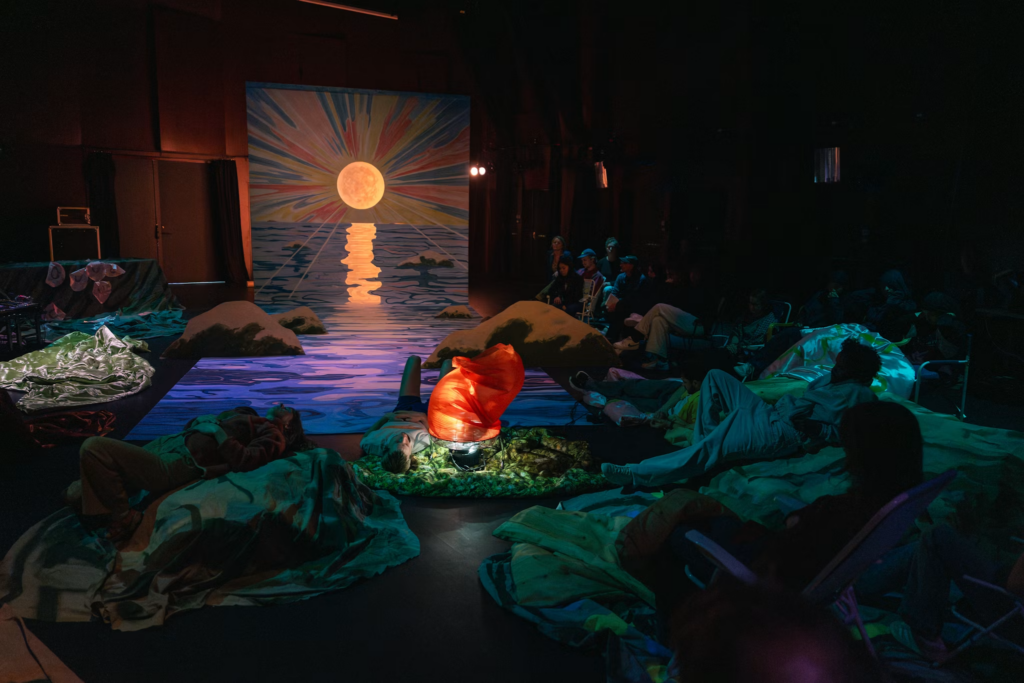
Now I'm older than most of the editorial staff, relatively cynical and self-absorbed, and I could easily crush a couple of artists. So on Wednesday morning, my first performance at Heddauka, I was ready. My glasses were sitting far down on my nose and I was ready to be lofty and critical of Binnánaš Balus – Almost Not Afraid at Kloden Teater .
I would say the facade began to fall as I crawled into the cramped tent, and I was placed next to a blond four-year-old in a pink jumpsuit. Around us sat a group of toddlers in yellow reflective vests. As the telltale smell of pee wafted through the audience, I began to reconsider the creepy role of critic I wanted to take on. Although I personally didn't exactly enjoy the experience, it became very clear that it wasn't for me. The children gasped, they discussed with each other what was happening, and they laughed at the slapstick that I found sloppy and a bit childish.
Let's think about Anton Ego and what kind of critic he is. I must admit that I found his lifestyle attractive: drinking wine, writing sharply and having power with every word he writes. I also think subconsciously that many art critics like to indulge in that role, at least to a certain extent. Having our opinions heard, weighed and respected is something we humans seek in our daily lives. You could call it a symptom of the herd mentality.
But we don't always seek just respect, often any reaction is satisfactory enough. I like to write well and objectively, but a large part of me almost always has the urge to make an unfounded and exaggerated point, which has no other purpose than to provoke. I get a kick out of justifying something that I don't really believe or stand for, because that's where many of the most entertaining moments for me lie as a critic. Still, I recognize that it's a rather pathetic cry for attention on my part, and more often than not it's the first thing cut by the editor. Critics are expected to be objective and objective to the best of their ability, but every time I really want to write some nonsense, because I want a reaction.
To a certain extent, it is self-centered to criticize other people's art. Because while I sit and write I always think about what kind of impression the text gives of me. I think that is where the urge to break away from the objective stems from; I want to show myself in the texts. What I want to show is that I love art, but also have the ability to laugh at the more silly aspects. To show a contrast between well-informed reflections and less informed condescending comments, included only for the entertainment of others. It is almost a bullying mentality, carried out in the most cowardly way behind a screen. I think it stems from my fear of being perceived as a boring critic. I am terrified that my reviews will become brochures, something you read only to get the necessary information or for a quality check of the product. But if you take the objectiveness out of a criticism, is it still a criticism? And in an age where everyone can share what they think with the whole world, is there any point in being objective?
Is everyone who comments on theater on Instagram or X critics? Is the only significant difference between me and them is that I get paid? When everyone has the opportunity to share what they think with the whole world, I experience my role in the art field as insignificant and a little arrogant, as if I think I'm better than the rest.
On Saturday in Heddauka I sat and pondered this. I had seen about 18 performances at this point. Now there were two left. I sat and ate lunch at Scenekunstbruket's expense, and wondered why they actually paid for my food. The spiral of thoughts continued. I thought back to the performance Almost Not Afraid the first of the week. I pondered how my thoughts contributed to it. Would the performance, or the experience of watching it, really have been improved if I had said what I thought? How much is our opinion worth?
I remember surprisingly well where I was on July 22, 2011. I was four years old and at Tusenfryd with my dad, grandfather and sister. On the car ride home I was asked to shut up, for the first time in my life, while my dad and grandfather listened intently to the radio that conveyed what had happened. The attack took the lives of a total of 77 people, 69 of them killed at the AUF summer camp, 33 of those killed were under 18.
15 years later, I am now the same age as many of the oldest participants on Utøya were at the time.
I came in. gymsalen up on the Rommen stage. The actors said we could just move however we wanted and just listen. And for the first half hour, there were only four actors who gave reason after reason why they want to speak their mind. Whether they want to impress, they are looking for unity and friends, it is an outlet for something else, or they are committed and want to share that commitment.
It's a childish desire to share what you like.
In elementary school, I quickly became afraid to share. In meeting other children, I discovered that not everyone was as educational and accepting as my family when I made theater in the living room. I don't think I regained the urge to share my interests until high school. My interest in theater could easily have been labeled as gay or girly, and writing was also something I kept private. Writing poetry and theater was not that popular among the football guys, the preppy boys in China, or the skate guys at Steinern. When I finally entered an environment where I wanted to share my commitment, I still felt that I had to defend my interests and opinions.
As a critic, I often find myself trying to convince people that I am right when it comes to theatre. I realised during Heddauka that this is quite misunderstood. It is obviously impossible to be right in art. I can really only give insight into my perspective. And as the week went on, I also started to let go of this urge to convince more. Instead, I enjoyed all the performances, bad or good.
What is the point of sharing your perspective? Engagement. Theatre has been called a dying art form for many years now. But what was most striking during the Heddadayen was the enormous engagement for theatre. Also among young people. I usually joke that every time I enter a theatre hall, I lower the average age considerably. The exception was during Heddauka, where the halls were filled with many young adults my own age.
I believe that being someone who is involved is at least as important a role within art as being the one who creates it.
All engagement has value. It can be silent, you don't have to shout it out, the audience's role is invaluable. But I will personally fight for those of us who shout. I find that well-written criticism is a good way to spread your engagement to others. And ultimately, the goal is to spread engagement. There are many things that can stand in the way, whether it's your own ego or commercial aspects, but the value of that task remains very strong. So the next time you see me shouting about something, know that it comes from a place of love and engagement.
July 3, 2026
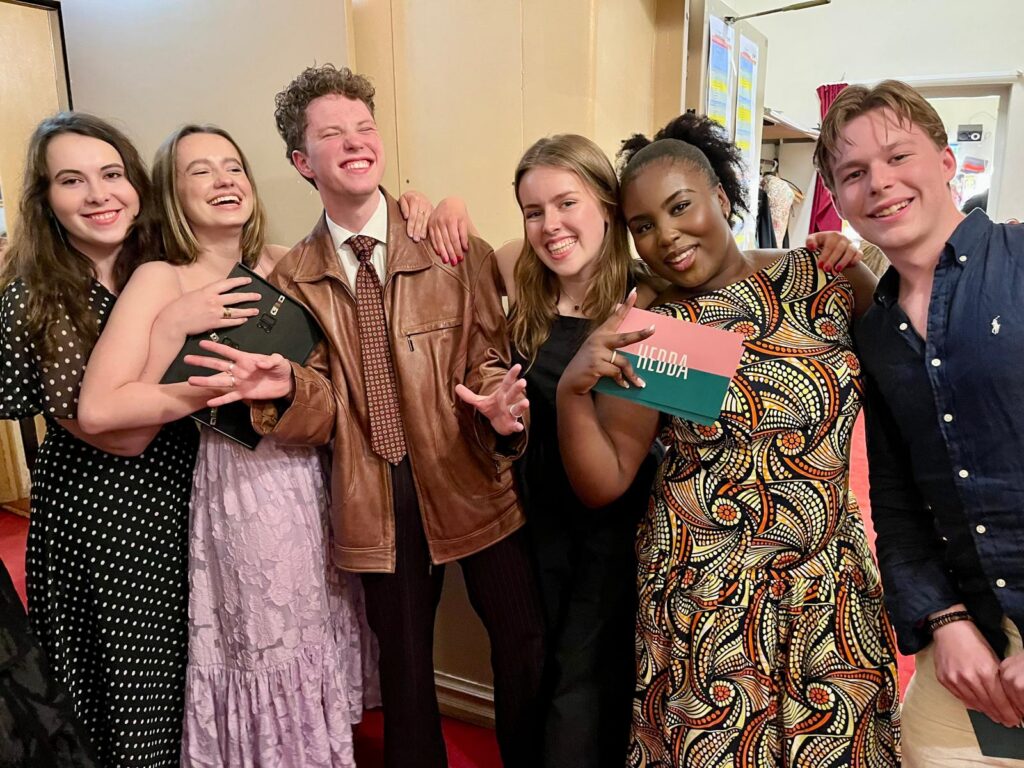
Aksel August Ruud Raustøl was one of six editorial members who made up the Young Voices Festival Prize 2026. Together they reviewed the entire Hedda Festival program, and based on that, selected three nominees and one winner. The prize was awarded during the Hedda Prize ceremony at the National Theatre.
Nominated and winner:
15 years – The Norwegian Theatre, performed at the Rommen stage
Nominees:
Good luck, Cathrine Frost – The Second Theatre. Played at the National Theatre
Heimert – Tour Theatre in Trøndelag, shown on Vega Stage