
So stupid it's fun
The guys at Det Norske Teatret are so stupid that it's funny, writes Fiona Åtland (20) in this illustrated review.
Arne Lygre's new play "Give Me Your Hand" tries to be a humorous family drama, but even though the actors are good, it doesn't work well when the play is boring.
The play wasn't good, nor was it bad. The humor didn't land, the costumes were silly, and the set design was overwhelmingly minimalist. These three things aren't really problems in themselves, they're symptoms of something far worse: the play was boring. It felt half-baked, like Lygre watched Affecsjonverdi , then wrote Gi meg hånse on a napkin and gave it to the National Theatre. Yippee, another story about an upper-middle-class family with daddy issues. While I think upper-middle-class family dramas have become a bit cliché, there are still ways to make it interesting. Audiences love dramas about people who don't have to worry about how expensive the bags at Kiwi have become. But instead of sitting on the edge of my seat, I counted down the minutes until intermission.
Gi meg hån is a play written by Arne Lygre and performed at the National Theatre. It is about an aging father who invites his three daughters, two grandchildren and his granddaughter-in-law home to give them an important message: he is going to die. The family has not been together for a long time and while the grandfather builds up the courage to tell them the reason why he invited them home, we follow the family through a series of conversations that slowly but surely reveal the family dynamics.
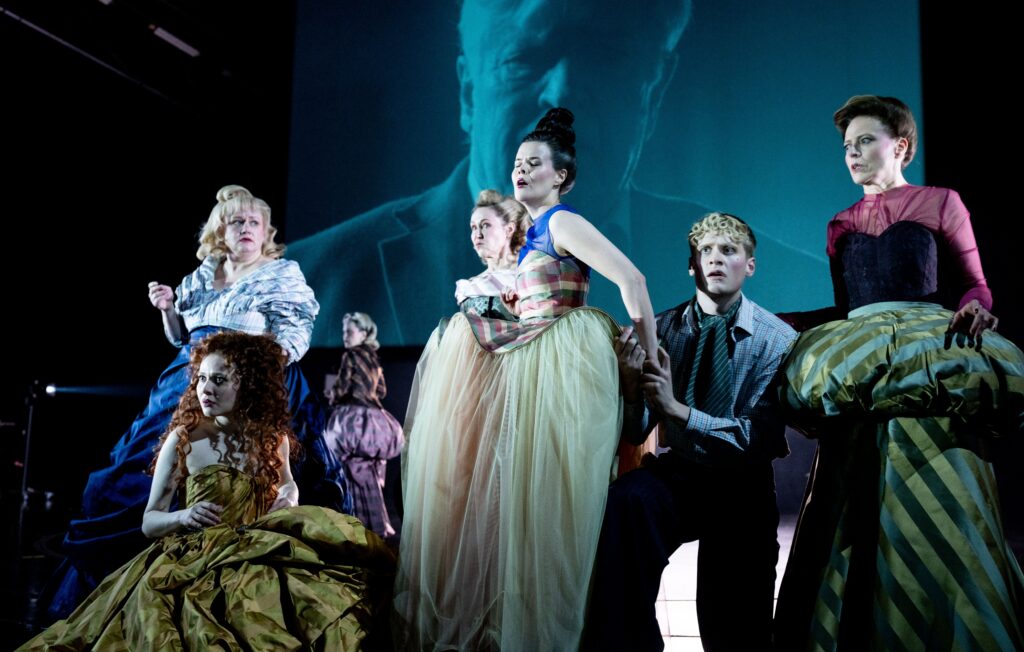
Although I disliked the play, it is clear that Lygre is a good playwright with a unique style. When reading him, you are never quite sure whether the characters said, thought or did anything. I wish he had leaned more into that in Gi meg hånd , instead the play exists in limbo between drama and humor, and fails on both fronts.
I also thought the plot was interesting and absurd, so it's a shame it had such a boring resolution: A father/grandfather who only speaks in the third person wants to die. So he planned his death and is going to be euthanized in the clinic in 24 hours.
This is dark humor on a silver platter, Lygre threw the platter at the wall and decided to make himself a slice of bread with yellow cheese instead. Most playwrights would have capitalized on the time pressure and sadness. But instead we spent at least an hour getting to know the family and all their drama, and another hour watching Grandpa hesitate. This performance was very “safe”, far too average and unengaging for someone who writes the way he does.
Due to the lack of set design, the actors did a lot of “heavy lifting”. This affected the drama if the actors were not 100% involved. I saw the play twice, the first time on the day of the premiere and the second time the day after. At the premiere, you could feel the nervousness, tension and inner turmoil from the actors. A friend of mine calls this being in a shell. When an actor is in a shell, the character is hidden behind all the negative emotions that pour out of their pores and do not fit the character. That was one of the factors why I left the premiere after the first act (in addition to the fact that I found it boring). The next day, the shell was no longer there and I was able to finish the play.
The minimalist set design felt more like laziness than an intentional and thoughtful choice. Due to the lack of set design and the short, simple lines (which made it sound like the characters were reading instead of speaking), the plot didn't get the emotional weight it needed. And emotions are very important in a play about a father dying.
The play tried to address far too many themes and in the end it became a half-hearted performance about death, love, loneliness, family trauma, maternal love, etc.
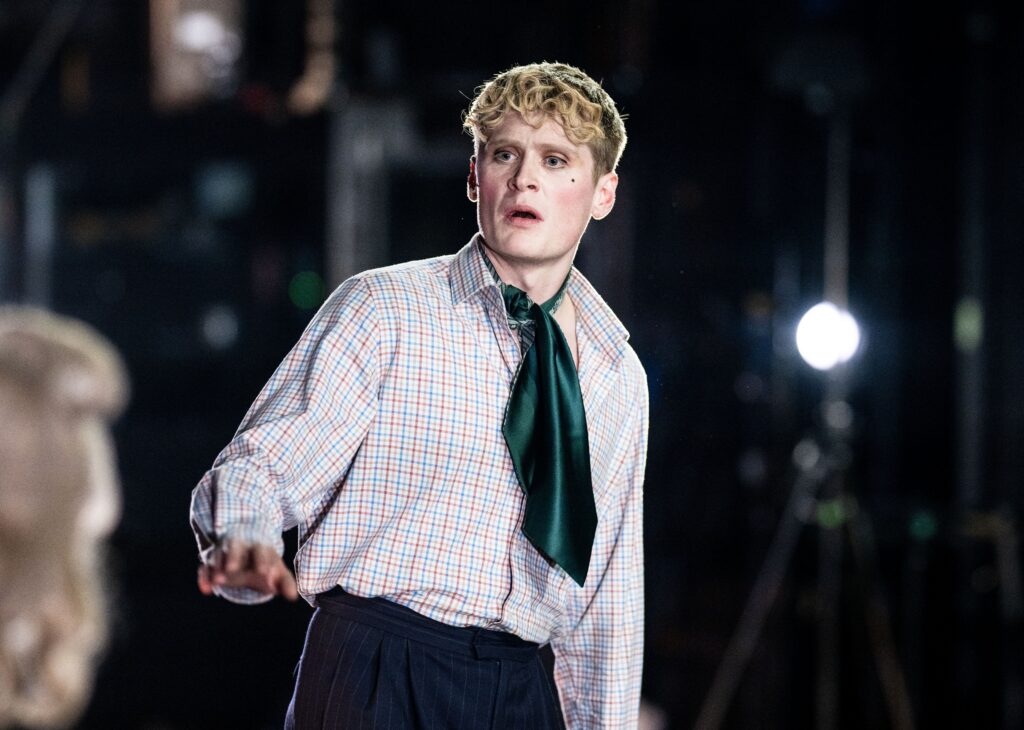
At times, the play felt like a long hate letter to the grandson Jakob's (Alfred Ekker Strande) mother. She (Laila Goody) was a scapegoat throughout the entire performance and no one gave her more than two lines of sympathy. This is a shame because the sibling relationship between Jakob's mother, aunt and half-aunt was very interesting. All three had enough problems for two hours of theater, and it became very engaging when they realized that their relationships with their parents were different. But instead of digging deeper where the gold is, the play became like throwing all the spices you have into a pot of noodles, only to end up tasting salty.
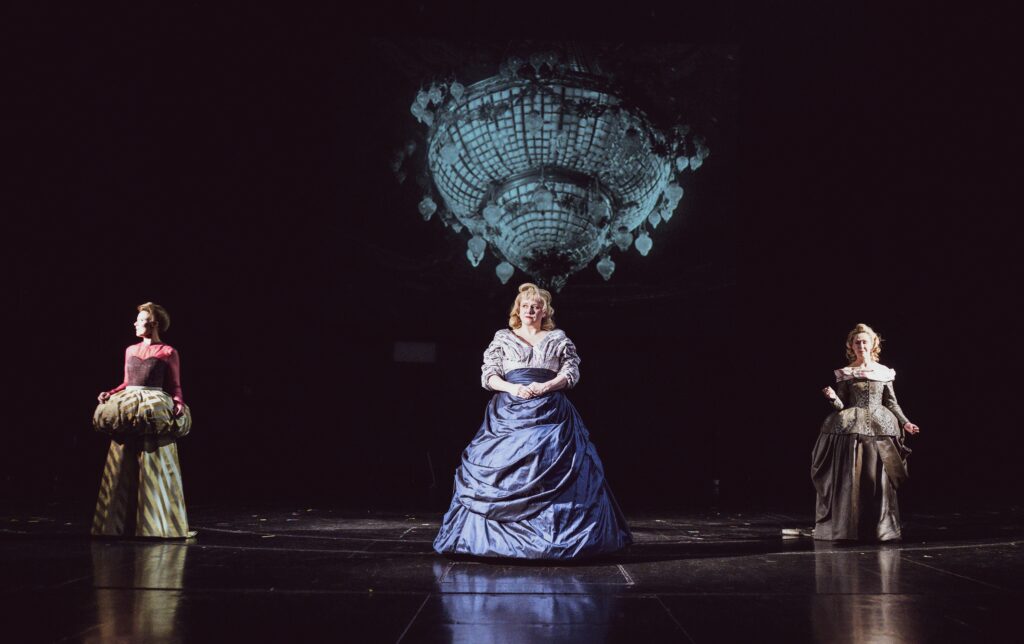
If they had fleshed out one or two themes, made the character even weirder and more self-referential, this play could have been something in its own right. Instead, Gi meg hänen becomes another in a series of mediocre plays and a piece of time I wish I could get back.
May 19, 2026
Director: Johannes Holmen Dahl
Set and costume designer: Nia Damerell
Lighting designer: Martin Myrvold
Composer and sound designer: Alf Lund Godbolt
Video designer: Pernille Sandberg
Masker: Ida Kristine Høgbakk
Video manager: Frode Finslo
Cast :
Mother: Laila Goody
Grandfather: Kai Remlov
Aunt: Trine Wiggen
Half-aunt: Ine Jansen
Jacob: Alfred Ekker Strande
Girlfriend: Kjersti Tveterås
Cousin: Hanna – Maria Grønnberg
Assistant: Marian Saastad Ottesen
Camera operator: Pernille Sandberg
Musician: Madalena Rato
Seen on March 26 and March 27, 2026
All photos: Lars Opstad / National Theatre