
The musical Ingvar – it's typically Norwegian to be good
On Thursday, September 10, IKEA came to Østfold in two formats. One as a physical store, and the other as a musical. Unfortunately, I made the trip to the wrong IKEA.
In an attempt to dig up the painful and the awkward in Alf Pøysen's lesser-known stump songs and songs, there is little room for the humor and the oblique view that makes Prøysen so unique.
On August 29, the day of the Oslo premiere of Prosjekt Prøysen , it was raining heavily in Oslo. Despite being dressed in a raincoat and carrying a waterproof polyester bag, I sat in the foyer of the Norwegian Theatre with a soaked textbook. The water bottle in my bag was leaking. On my way into the auditorium, I therefore dragged a Norli bag with a brand new book, a costly purchase that was not included in the student budget. After a wet and expensive afternoon, it was therefore fitting that the first musical number of the performance was called (For her er det) solskinn og sang , a ballad about an optimistic musician who spreads joy in all kinds of weather. The older men and women around me swayed to the music and sang along. A small moment of simple everyday joy.
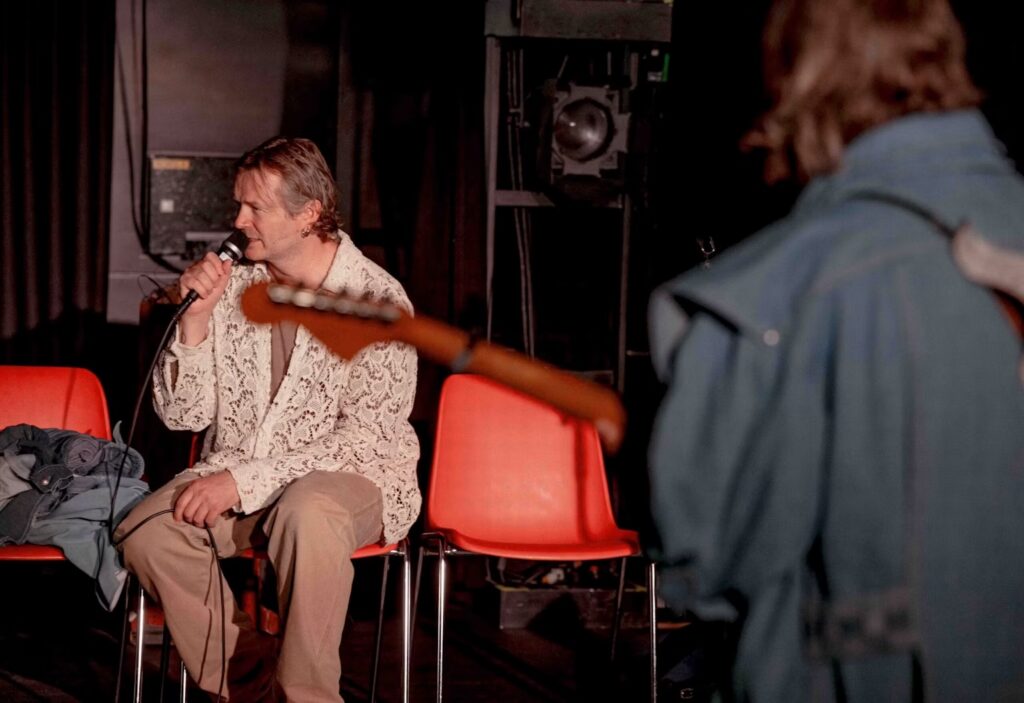
The warm atmosphere on stage quickly dissipated when musician Knut Andres Sørum began to talk about a black spot that sits inside our heads. The other actors and musicians sat on the side of the stage and retreated to their instruments while Sørum performed the text Je . The text is about a little boy who discovers that we all have a black spot, our own identity, that sits isolated inside our heads, separated from others. This is the beginning of a series of short stories (stubs) and plays performed by Frida Ånnevik, Knut Andres Sørum, Terje Strømdahl and a music ensemble consisting of Synnøve Ovrid and Øyvind Røsrud.
The Prøysen Project deals with the Alf Prøysen material, which is more painful and rough in its themes than the ballads many of us grew up with. For example, we get to know the widower Jørgen who builds a large house for his new wife and then hangs himself in the attic, shortly after the house is finished. We also meet a girl who is allowed to go into Tull-Martin's barn where he hides the most beautiful works of art she has ever seen. When she shares this magical experience with others in the village, she learns that Martin is an outcast weirdo and the admiration for the works is replaced by shame and embarrassment.
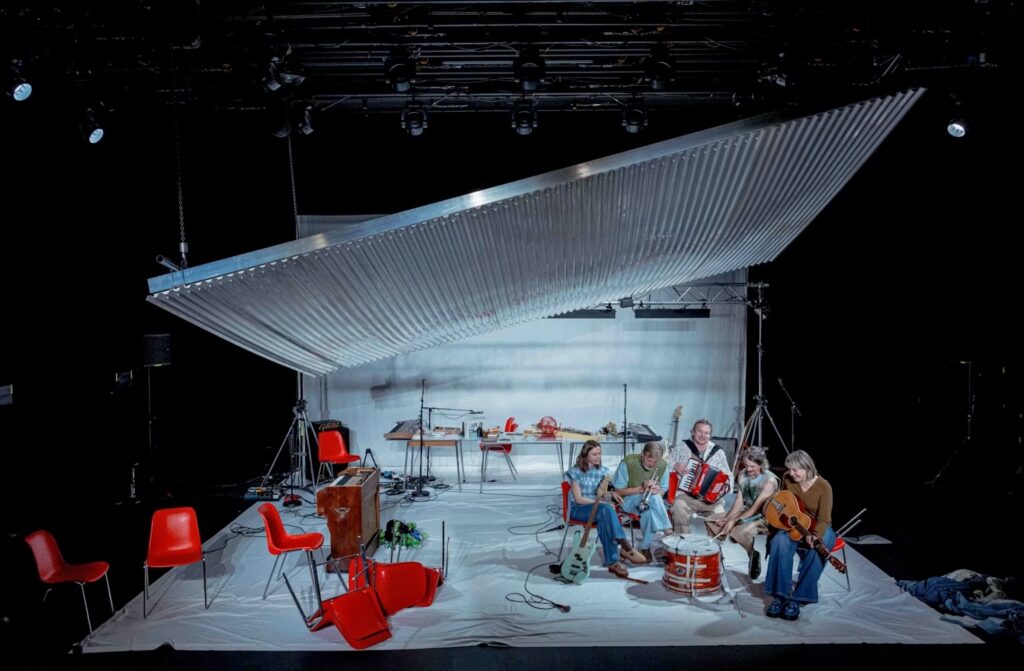
The set design is simple. On each side of the stage is a row of chairs that the performers sit on when they are not playing. Together and separately, and together with the musicians, they perform independent songs and stubs that have a thematic connection in the outside world.
The lyrics they perform deserve to be far better known, but to put it bluntly, I found the composition and pacing of the piece to be somewhat tedious.
On the occasion of the king's passing the day before the premiere, a minute of silence was held before the performance, before Terje Strømdahl compared Prøysen to the king: "Prøysen was a story-telling king". The Prussian slant is warm, slightly ironic and conveys serious themes through the everyday. The songs may seem simple and pleasant, but when you listen carefully, you discover what he is really singing about. In Prosjekt Prøysen , the content is filtered down to the painful and disturbing. The performers stand on stage in dim lighting supported by cold electronic tones. The slow speech and pauses emphasize how sad they themselves think the stories are. For me, this seems counterproductive. What was a sad revelation when Sørum started with the stub Je , became a repetitive narrative style throughout the performance. All the stubs flowed together in a big sigh. Even though there is great variation in content, the texts are performed relatively similarly. The performer or performers stand up, face the audience directly, and read or sing passionately to them, before sitting down and making room for the next person.
As stated on the performance's website, the trio on stage are some of our foremost Prøysen interpreters, but here I think the artistic expression has made it difficult for them. It is a shame, among other things, that Frida Ånnevik's first solo is drowned out by too much bass in an attempt to create inner unrest.
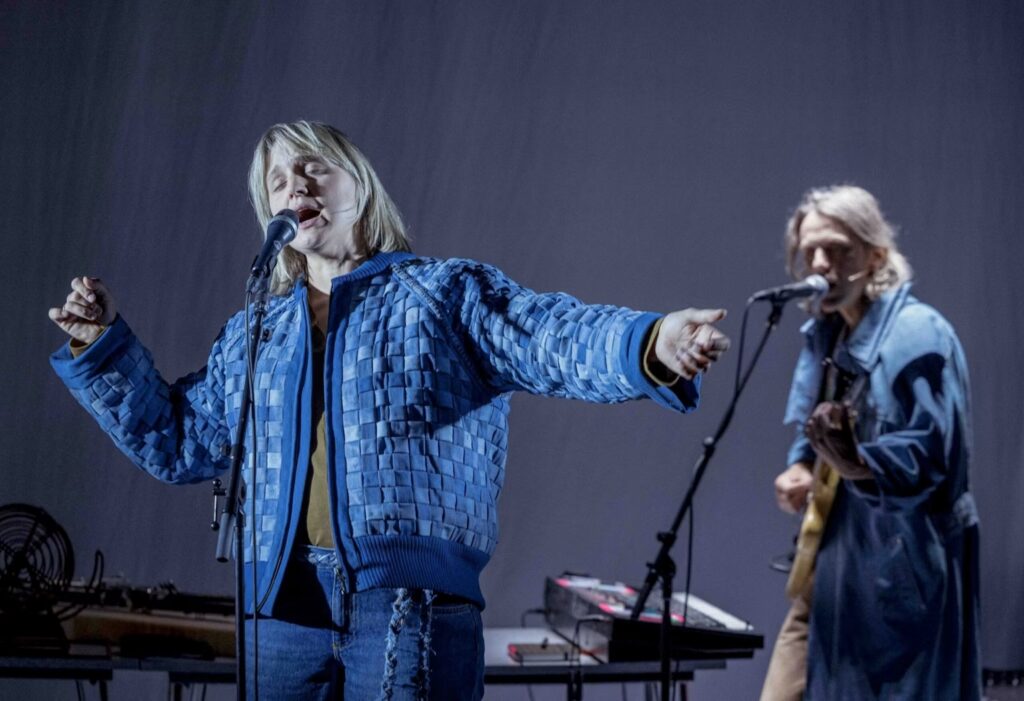
What started so well eventually made me a little tired. It was all the more liberating when Ånnevik let loose in Slipsteinsvæilsen . Her clear voice carries both beauty and rage at the relentless passage of time. I was skeptical of the electronic music production, but here it works. The synthetic tones had something ghostly about them, like the sound of an old carousel that continues to go long after everyone has gone home.
It was only on the way out of the hall that I realized what I had really missed. When I was standing in the dressing room to get my bag with the soaked book in it, I heard people around me humming Strangers in the night after Alf Prøysen's cover of the song from 1966 had been played on the way out of the hall. After the performance, this little moment was an uplifting break. It made me think of how the first musical number, (For her er det) solskinn, got parts of the audience singing along. Both moments had something the performance otherwise lacked: a contrast to the seriousness. When everything was interpreted so sadly, it lost some of the ambiguity that makes Prøysen interesting.
September 2, 2026
On stage: Frida Ånnevik, Knut Andres Sørum, Terje Strømdahl
Musicians: Synnøve Ovrid and Øyvind Røsrud
Director: Magnus Myhr and Jørgen Strickert
Scenographer and lighting designer: Elisabeth Kjeldahl Nilsson
Costume designer: Lise Søraune
Musical director: Øyvind Røsrud
Sound designer: Pål Terje Antonsen
Producer: Camilla Ødegården Bakken
Artistic sparring partner: Thea Stabell
Photo: Tale Hendnes
The performance is produced by Teater Innlandet in collaboration with Musikk i Innlandet.
Oslo premiere at Det Norske Teatret, August 29, 2026