
Essay: “This is the burden of every little girl”
Now that Thelma & Louise is being performed at the Young Vic in London, it has become a reflection of our misogynistic age, says Aksel August Ruud Raustøl.
Frequent use of the camera gives a modern touch to the 60-year-old musical Cabaret at Det Norske Teatret, it also provides a new perspective. A way of seeing theater that opens up a whole new world.
A tired but enthusiastic Emcee (Preben Hodneland) sits looking straight into the camera through a dirty backstage mirror, the kind with big light bulbs around the frame, in the dressing room of the Kit Kat Klub nightclub. Sweat sticks his bangs to his forehead, and he repeatedly throws his head back to drink the clear contents of the glass bottle he is holding loosely. He sings the well-known opening song “Willkommen.”
“Welkommen, bienvenue, welcome!”
Screens and cameras have been used frequently in the theatre world for as long as I have been alive and Cabaret at Det Norske Teatret is no exception, but director Kjersti Horn solves it here in a completely different way than I have seen before. When we enter the hall, there are three large screens that cover the entire stage like a stage curtain. The sequence that I describe in the paragraph above is only shown on the screens, and throughout the entire performance, close-ups of the actors on stage are shown at all times on the various screens, which frame the stage or cover it completely.
At first I thought it was overwhelming and I had a little trouble following the acting on stage instead of the screens, but it didn't take long before I got used to it and saw the value in having it that way.
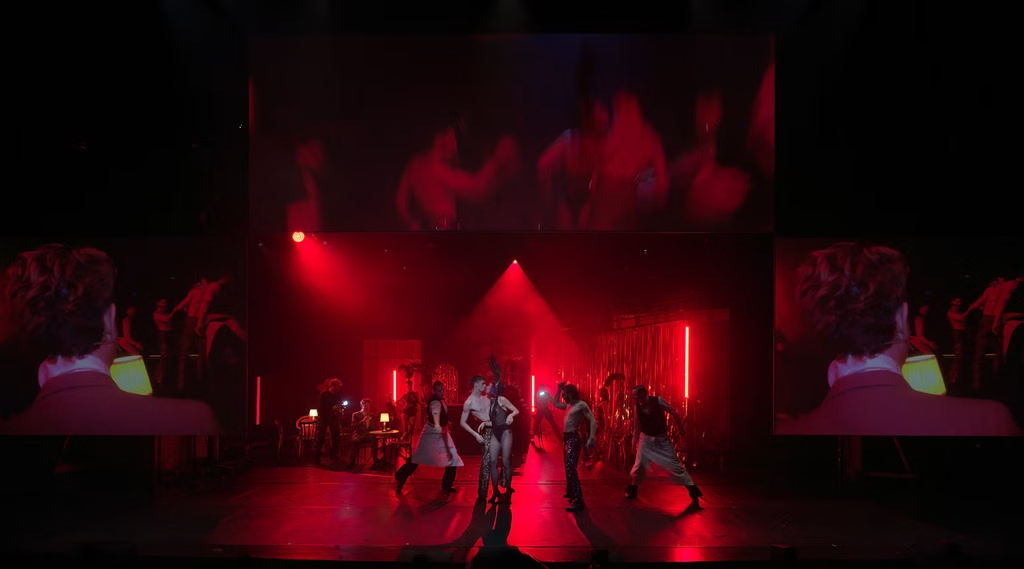
Cabaret was first staged in 1966 and is based on and inspired by the book Goodbye to Berlin (1939) by Christopher Isherwood, about his own stay in Berlin between 1929 and 1932. In the musical we meet the writer Cliff Bradshaw who arrives in Berlin on New Year's Eve 1929 and meets Ernst Ludwig on the journey. He recommends both a place to sleep and a nightclub called the Kit Kat Klub. Here Bradshaw meets the club's singer, Sally Bowles. Inside the Kit Kat Klub there are no problems, they are left outside, here you can taste freedom in the air and sweat runs off the walls, no matter how cold it may be outside. Politically, it is quite chilly outside the doors of the party-filled nightclub. The Nazis are gaining more and more power and they are both neighbors and friends with non-Nazis, and it is precisely in this contrast that the plot is located. Between freedom and total oppression.
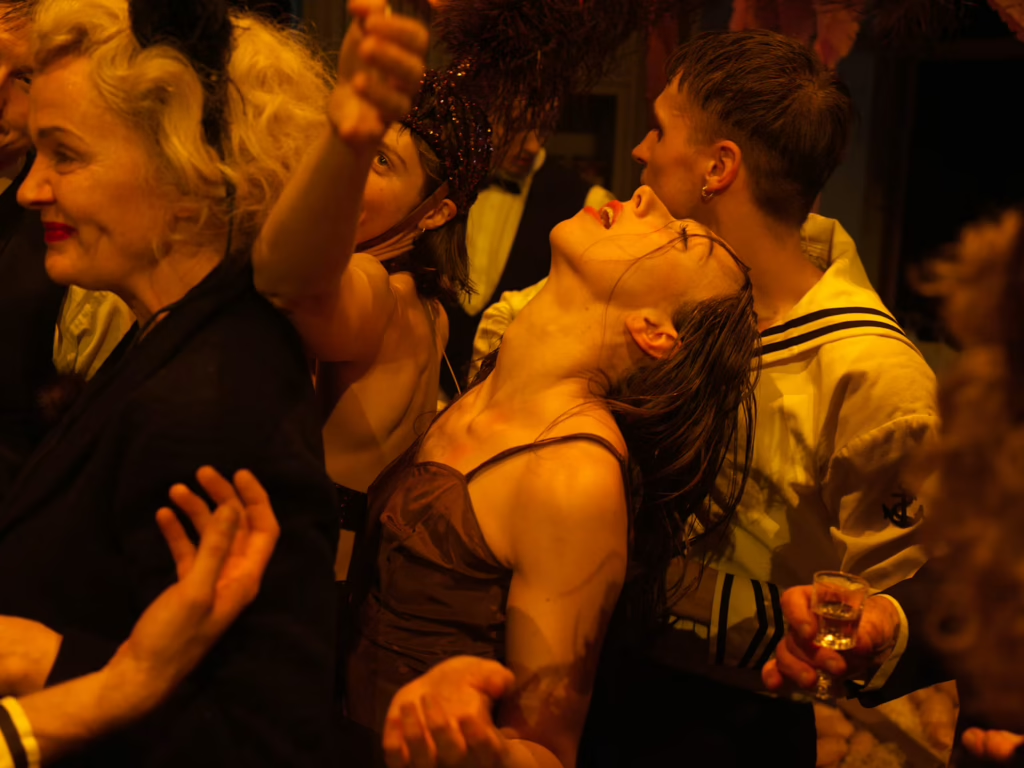
Filming what happens on stage gives a completely different understanding of the characters and a new perspective. It's a move I'm used to from festival stages so that everyone can see what's happening on stage. The downside of large theater stages and halls has always been that you lose some of the actors' facial expressions and expressions, and thus some of their emotions, if you sit far back, but this use of screens gives us the best of both the film and theater worlds and highlights the strong acting. In this way, the director lets us see the actors' tears flickering in the corners of their eyes, see hidden glances in a crowd and small twitches in the corners of their mouths that shouldn't really be visible to others. It gave us in the audience a closer connection to the characters.
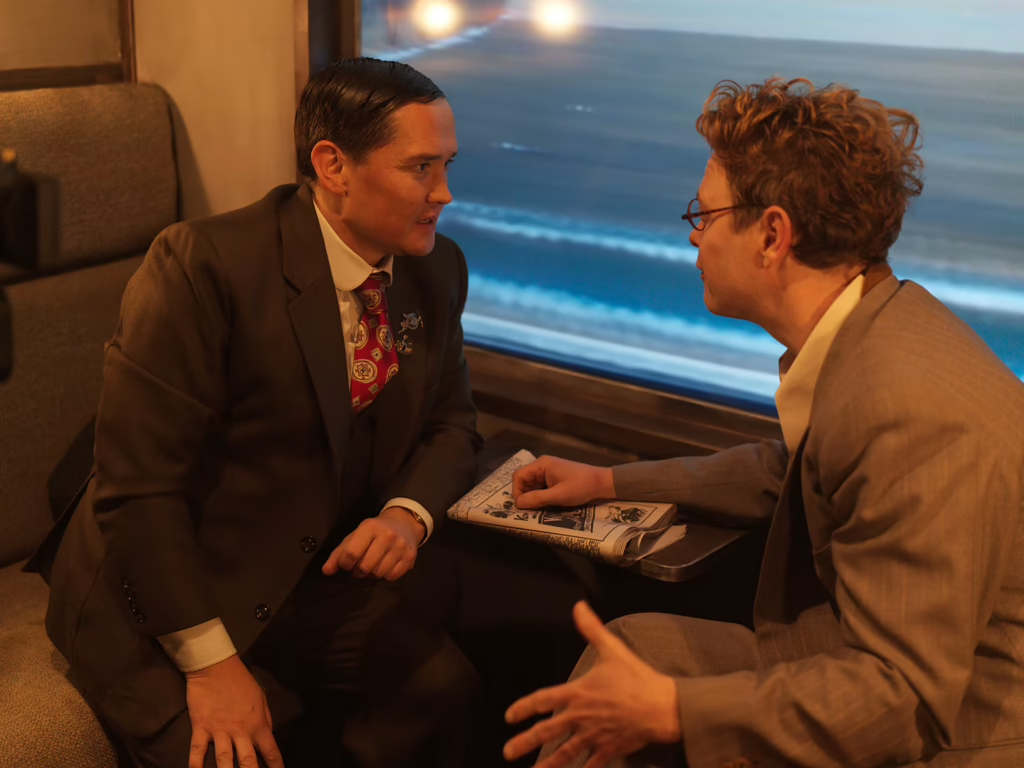
The use of the camera can also lead viewers to focus more on specific things, for example by zooming in on something that doesn't come across as well on the scene or that you want to focus on extra. An example of this is when the character Ernst Ludwig (Frank Kjosås) takes off his coat and reveals a red ribbon around his upper arm, where the camera zooms in on the swastika that eventually fills the entire screen. Even though you see the red ribbon from the audience and know exactly what it means, the zooming makes the scene very overwhelming. It's almost as if they're screaming at us that the Nazis are among us, no matter how much we try to tell ourselves that it's not true. By doing it this way, it becomes even clearer, almost brutal, and it almost seems as if the world stops for a moment as Cliff Bradshaw (Emil Johnsen) stares wide-eyed at the swastika.
In previous performances I have seen where cameras have been used, they have, for one, only been used in parts of the play. The use of cameras has also seemed like an afterthought and thus not very well thought out. And it seems, after seeing Cabaret , almost as if the performances I have seen before have only used cameras because that is what is in fashion at the moment, but that it was never really part of the plan from the start. In Cabaret it feels like it is part of the performance and that it has been part of the planning all the way through. You really notice that there is a video director on staff.
The camera is not only used to reinforce what is seen on stage, but also to show what is not seen on the stage itself. Relatively early in the performance we find ourselves at the Kit Kat Klub. On stage there is a euphoric atmosphere and there is dancing to loud music, but on the screens we can see Sally Bowles (Sara Khorami) being knocked down by one of the male dancers. The camera follows her as she is taken backstage by the Emcee and has the blood washed off before she returns to the stage. I have seen this device used in other performances as well, such as in The Rocky Horror Show at Oslo Nye Teater which was played from September to October last year (2025). But there it was usually used alone, where what was shown on the screen was what was in focus. The camera appeared there as a device that was used to show things that I assumed had no place on stage, to make it more authentic instead of props on a stage and to make it more exciting for the audience, as a change from the stage performances. Examples of this are when they were going to show Brad and Janet's wedding day; the camera followed them through the theater premises that were decorated for a party, the lights on the stage were dimmed and nothing else was happening while the video was shown, which gave more focus to the screen. On the other hand, showing different things on the screens and on the stage at the same time can open up to telling a parallel story that highlights a darker backdrop. In Cabaret, however, the use of the camera leads to an uneasy feeling that things may not be as wonderful and free as you want it to feel. That the dirty and sweaty nightclub life is hidden by sequins and singing.
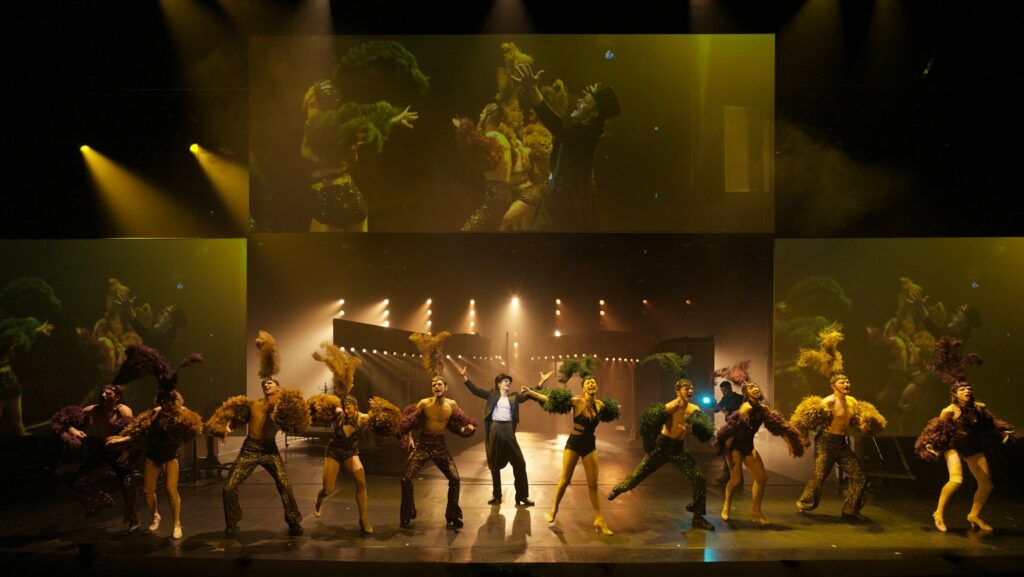
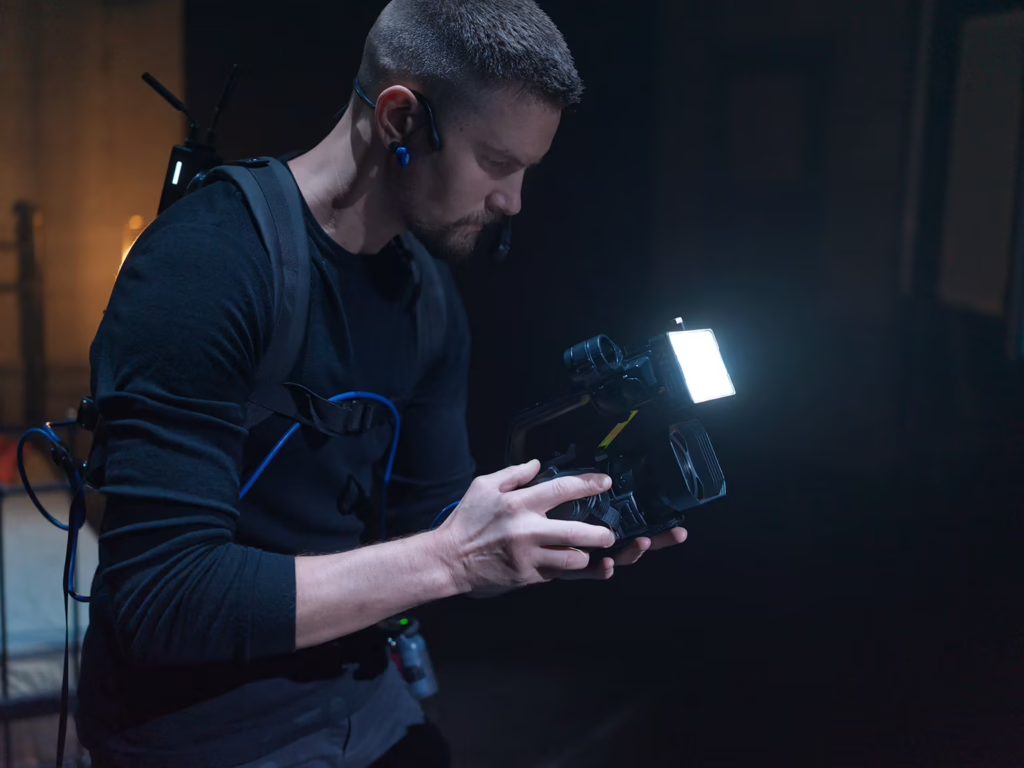
Nightclub life is on display and hidden behind the cameras. By having two cameramen (Mads Sjøgård Pettersen and Borgar Skjelstad/Eirik Evjen) on stage and filming, one gets the feeling of being present during a film shoot. This reinforces the feeling that everything is just a facade, a play, which is one of the themes in Cabaret ; namely what goes on behind the scenes and outside the Kit Kat Club. In the story, it is Nazism that lurks outside the doors, but in the performance, it is we who are behind the cameras. Perhaps it is the performance Cabaret that is the facade and we who are the reality. We who are the unpolished, dirty and cold life that one tries to hide or forget. Perhaps this is what Kjersti Horn is trying to convey; that the world has not changed nearly as much as one would have hoped. Freedom feels more like a privilege than a human right. We may be at a similar crossroads to what Cabaret depicts, we must choose whether to close our eyes and ears to everything that happens outside and continue to live in our little bubble, whether to stay at the Kit Kat Club, or whether to leave. If one chooses to get away, from both the facade and reality, while one still can, then where should one go?
November 10, 2026
Screenplay : Joe Masteroff
Music : John Kander
Lyrics : Fred Ebb
Translation : Jens Kihl
Director : Kjersti Horn
In the roles:
Sara Khorami, Frank Kjosås, Preben Hodneland, Emil Johnsen, Gjertrud Jynge, Lasse Kolsrud, Ellen Birgitte Winther, Nina Lill Svendsen, Sarah Fischer Luckow, Ella Billqvist, Ane Birgitte Tveite, Aurora Itland, Andreas Holme Kjærland, Albert Wenneke Buchreitz, Jonathan Ibsen, Yannick Bosc, Carl Peters
Music Director: Svenn Erik Kristoffersen
Choreographer: Silas Henriksen
Scenographer: Sven Haraldsson
Video director: Mads Sjøgård Pettersen
Costume and mask designer: Patricia Svajger
Lighting designer: Oscar Udbye
Sound designer: Erik Hedin
Choreography assistant: Nina Lill Svendsen
Video director assistant: Borgar Skjelstad
Photo: Fin Serck-Hanssen
Based on the play by John van Druten and stories by Christopher Isherwood. Originally produced and directed at The New York stage by Harold Prince.
Publisher: Nordiska ApS – www.nordiska.dk
Premiere: October 17, 2026