
So stupid it's fun
The guys at Det Norske Teatret are so stupid that it's funny, writes Fiona Åtland (20) in this illustrated review.
Oliver Lovrenski's "When We Were Younger" evokes laughter, nostalgia and sadness at Det Norske Teatret.
The story begins inside Ivor's house; a bedroom with football posters, dirty laundry everywhere but in the laundry basket, and a sea of memories. From this bedroom, Ivor tells his story of how life was easier when he was younger. The stories Ivor tells, however, show something else. With a problematic upbringing, it resulted in Ivor and his friends spending large parts of their lives out on the streets of Oslo.
One scene that sticks with me was when the girl Ivor was interested in said, “What you call memories are trauma.” It highlights how Ivor never had a safe and predictable childhood, but that he still has a nostalgia for when he was younger.
The set design is also something I particularly noticed during the performance. A small bedroom, small screens in the room playing various videos and rap in the background show what Ivor and his friends spend their time on. The various props used in the performance reflect a youth culture that is often visible on the streets of Oslo.
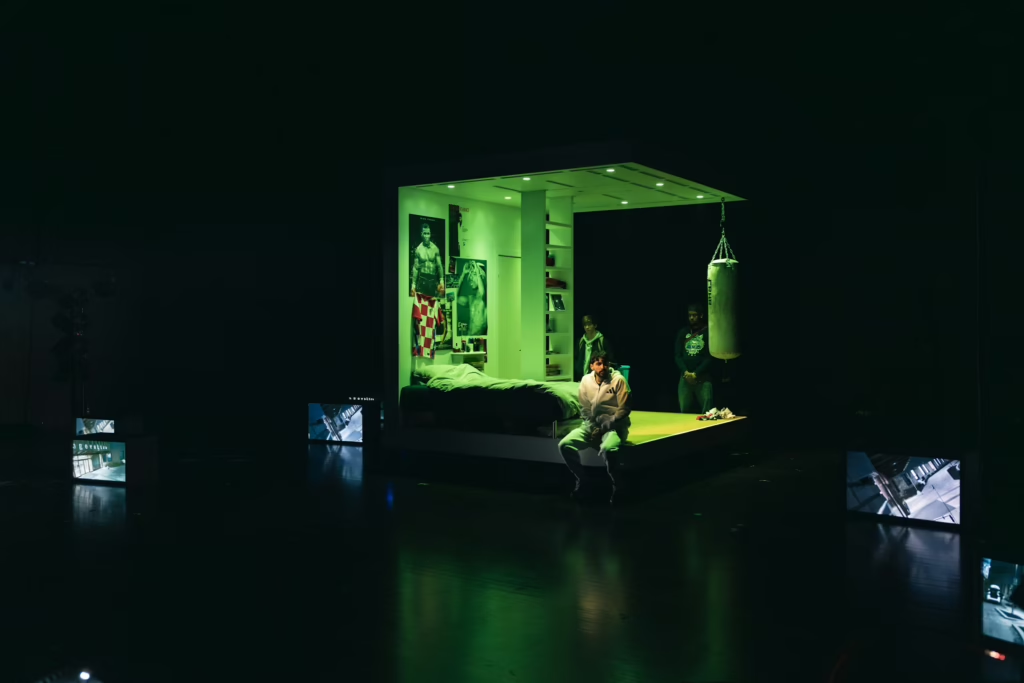
When We Were Younger has been performed at Det Norske Teatret since its premiere on February 28, 2025. The performance is a stage version of the novel by Oliver Lovrenski, which was published in 2023, when he was 19 years old. The novel was a major breakthrough for Lovrenski, who received the Booksellers Award, in addition to being nominated for the Brage Prize, among others. I believe that Lovrenski's novel has been met with love because it stands out. With an unconventional upbringing and language, Lovrenski's voice opened the doors to a new world for many of the adult readers.
When you constantly see young people committing crime on the news, it is easy to label these young people as just criminals, while forgetting that they are more than their actions. The stories in When We Were Younger show how young people fall into the wrong circles, but also who they are outside of society's perception of them. The characters open up about life's various challenges, whether it is family situations, life, death or love. The stage version was particularly good at highlighting how the boys choose to open up about heavy topics: That the boys make jokes about the topic, or are only completely honest when they are drunk. When We Were Younger shows how more young boys are falling out of society, and that something must be done to prevent this problem from developing further.
The stories Ivor tells can be seen as a criticism of today's society. Over the years, Norwegian society has become more characterized by gangs and youth crime, and it is a problem that will become greater with time. In February 2026, the Oslo Police District released statistics showing how youth crime has decreased by 5% in 2025, but that several of the criminal acts that year were very serious (see fact box). As a young person, I myself have noticed that the atmosphere in the city has become a little grayer when young people commit serious crimes. Therefore, I have long waited to find an explanation for what may have happened, and what is needed to prevent this.
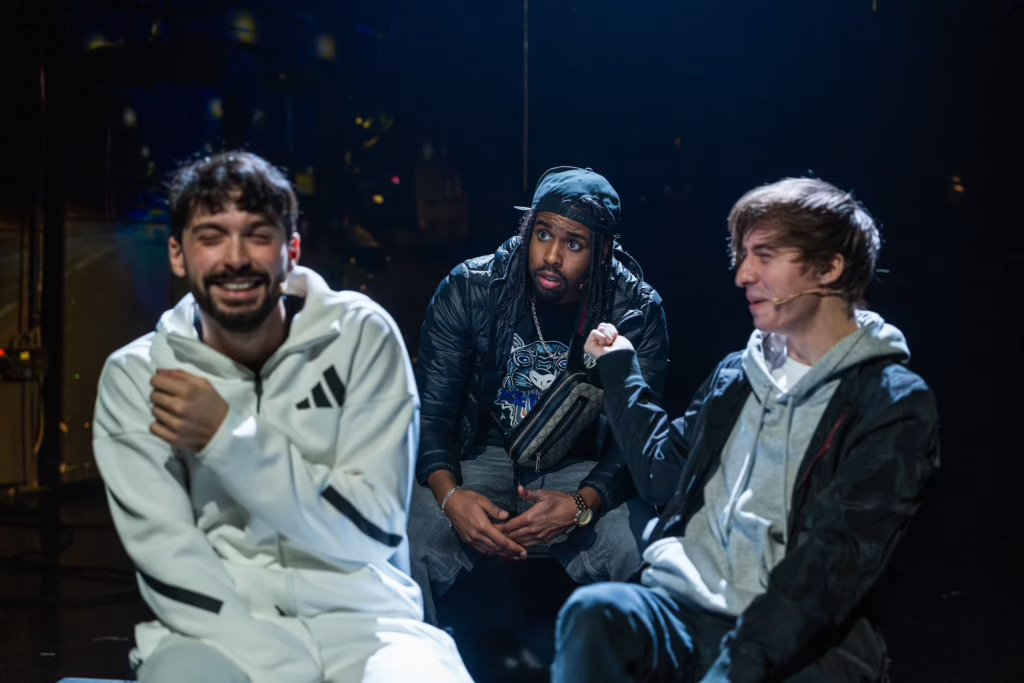
Although Lovrenski doesn't offer a solution to the problem, he highlights how love is what gets the boys through life's challenges. Regardless of the situations Ivor found himself in, he always knew he wanted his friends by his side. The loyalty of the boys' friendship allowed Ivor to have hope, even in dark times.
If there's one feeling I'm left with after watching the show, it's fascination. In the course of an hour and a half, I managed to be both sad and frustrated, and I laughed until the tears flowed.
I would almost call When We Were Younger a love poem. Although it may not be said literally, you can see how much friendship and love mean to Ivor, and that he would have been nothing without it.
May 28, 2026
Artistic team
Author: Oliver Lovrenski
Director and dramatization: Aksel Hennie
Set and costume designer: Dagny Drage Kleiva
Lighting designer: Reidar A. Richardsen
Sound designer: Morten A. Jorsett
Dramaturg: Ingrid Weme Nilsen
Cast: Serhat Yildirim, Astin Souleymane and Randin Kummeneje
All photos: Det norske teatret
Statistics on youth crime: https://www.politiet.no/nyheter-og-presse/oslo/nyhet/2026-02-17/aret-2025-felles-innsats-gir-nedgang-i-ungdomskriminaliteten
Set: May 21, 2026