
So stupid it's fun
The guys at Det Norske Teatret are so stupid that it's funny, writes Fiona Åtland (20) in this illustrated review.
At the Central Theatre, the shabby dresser is played with great emotion by an actor in his 30s. It does something to the play.
“The Dresser” shows how the theater sees that their reality is changing without being able to do anything about it,” says director Hans Henriksen in a podcast interview about the performance. The play takes place backstage at a theater during World War II. While the bombs are falling, a Shakespeare company is about to stage King Lear for the 227th time.
For decades, the company has toured the English provinces with the actor Sir at the center. The other actors work hard to support him, but according to his girlfriend and co-star Mylady , they receive week after week reviews that suggest they are barely up to his talent. She has lived with Sir for many years, even though he is still legally married to his ex-wife. Sir chose not to divorce in order to retain the opportunity to be knighted by the king. He wants to be recognized. Sir himself explains that it is cruel to be surrounded by people who are not blessed with the same talent as him and who therefore suffer in his presence. He further explains that the only person who understands this gift is the dresser Norman.
The staging is contemporary and true to the script. There are two scene changes in the performance, where we move from Sir's dressing room to the area backstage. The scenography is naturalistic, and the costumes are adapted to the time period. The whole creates a believable expression that draws attention back to the characters and the conflicts between them.
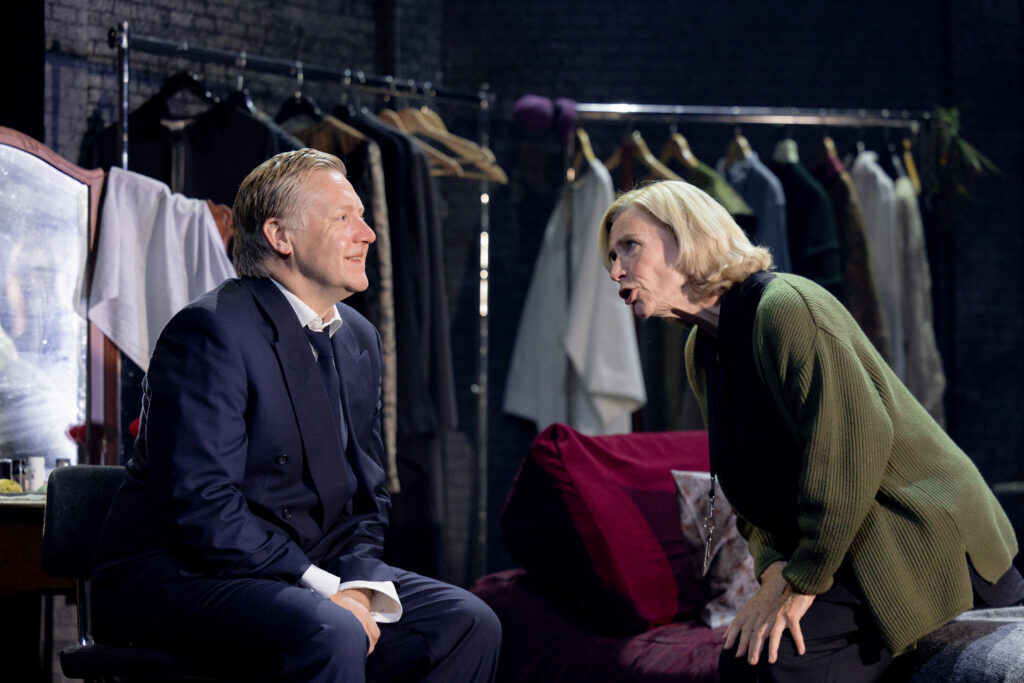
Mads Ousdal gives an excellent interpretation of Sir. Helle Haugen also stands out in the role of the stage manager Madge.
Everything Sir does is self-interested, but he still manages to pull the others along. The actor Oxenby initially refuses to help Sir make wind sounds in the storm scene in “King Lear” because he is frustrated with Sir. When the scene is still to be played, Oxenby volunteers to come in and make storm sounds with wave ink. Although Oxenby is frustrated, he still feels a responsibility for the performance.
This scene shows something central about the power structure in the company: The others may be critical of Sir, but they cannot free themselves from him. He is the star who draws the audience to the theater. The ensemble in the theater becomes trapped in Sir's power structure because they are dependent on the work and the security the theater provides. No one wants it to be this way, but everyone helps to maintain it.
Norman knows how dependent Sir is on him, but he is also dependent on Sir.
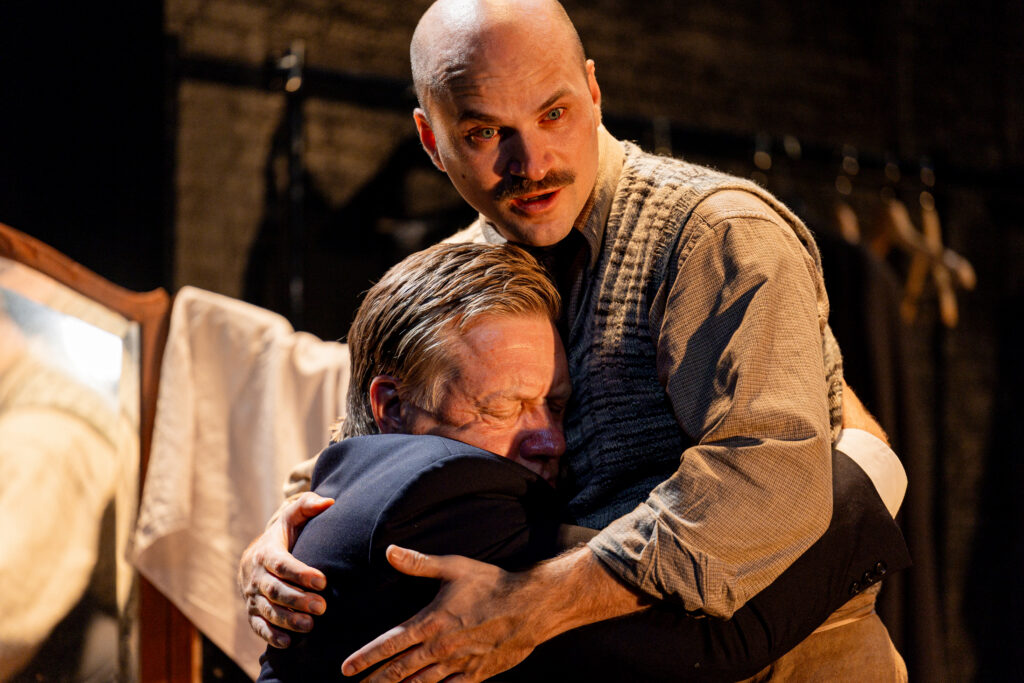
Sir is getting older and has had a nervous breakdown. Norman must therefore convince the ensemble that Sir is ready to go on stage as King Lear in an hour. The costumer is loyal to Sir, but loyalty is not just about feelings. He has tied his entire work to the actor, and with Sir's career now coming to an end, he is in danger of losing his job. The director describes in the podcast that the world outside the theater is not livable for Norman, because he is probably gay. I also imagine that he is old and frail and therefore not much of a workforce.
In this performance, Norman is overflowing with emotion. He cries easily, gets angry quickly and reacts strongly to what is happening around him. I find that he himself feels that his words carry a lot of integrity and therefore allows them to take up a lot of space. When he tells anecdotes about his own life, he acts as if he is the main character in a monologue performance, with long pauses and a tear-choked voice. In a way, it works well, because the stories about the life they have lived in the theater come out clearly through the presence of Ferdinand Falsen Hiis, who plays Norman. This becomes especially clear when Norman tells about his own life through the recurring line “I had a friend once…”.
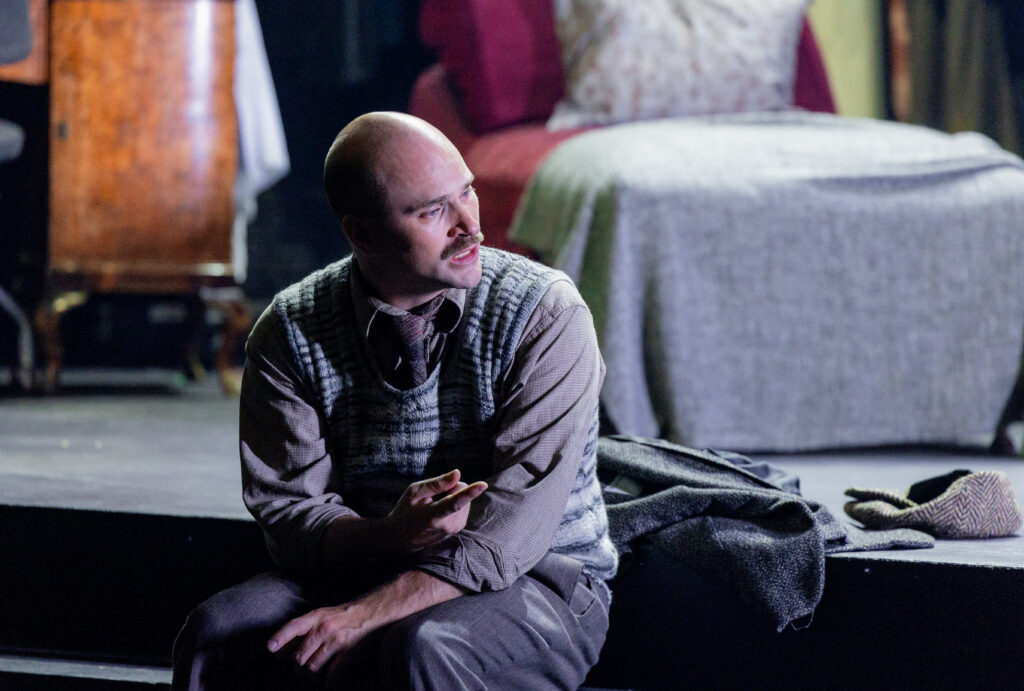
At the same time, I am critical of Norman being portrayed by such a young actor. When “Påklederen” was originally scheduled to premiere in January 2025, 66-year-old Johannes Joner was cast as Norman. This production’s Norman, Ferdinand Falsen Hiis, is only 34 years old. The age difference has an impact on how the character is read. Hiis brings a different energy to Norman than the one I associate with the character, and I am therefore curious about what lies behind the choice to make him so young.
I see Norman as desperate and that makes him extremely energetic. What he is good at in this life is getting Sir on stage. He is at work and he has to complete his task. Therefore, I find it difficult to imagine Norman having much time or space to be so emotional. When he does become so, I think the show loses a bit of the diligent and efficient side of him. I am also unsure about the premise that the world outside the theater is unlivable for Norman. In the show, he appears as a powerful and convincing man who demands his place.
September 9, 2026
by Ronald Harwood
Translated by Torstein Bugge Høverstad
Directed by: Hans Henriksen
Scenography and costume design: Kari Gravklev
Lighting design: Mathias Langholm Lundgren / Tina Aarrestad Wiik
Sound design: Bjørn O. Undset
Mask responsible: Birgit Haugå
Sir: Mads Ousdal
Norman: Ferdinand Falsen Hiis
My Lady: Agnes Kittelsen
Madge: Helle Haugen
Oxenby: Modou Bah
Irene: Catharina Vu
Thornton: Alexander Karlsen El Younoussi
All photos: Tale Hendnes
September 5, Oslo Nye, Central Theatre