
So stupid it's fun
The guys at Det Norske Teatret are so stupid that it's funny, writes Fiona Åtland (20) in this illustrated review.
The Wild Duck meets our contemporary world with humor, neon colors, and fragile masculinity.
I read The Wild Duck for the first time when I was 17. The Ibsen fanatic in me had probably just woken up, but it still wasn't an immediate favorite. I experienced it more as a standard Ibsen play, not necessarily something I pondered afterwards. Except for one detail: I always thought it was stupid that Hedvig shot herself. I understood that the family secret probably had more importance when the play was written in the 1880s, but still there was always an element I didn't believe in, and perhaps what brought the play down for me.
So when I turned up at the National Theatre on Monday after a long weekend, that was perhaps what I was most worried about with The Wild Duck: How can this performance make me believe in and empathize with Hedvig's fateful choice? Can something so overdramatic really resonate in 2026?
In general, this version does not attempt to adapt to 2026. The language is looser, but it is not on the surface an update to our own time. Nevertheless, this version's content felt new and exciting. The choices made in direction and character work speak to the moment without necessarily changing the text.
Hjalmar Ekdal is a more prominent main character here than he was in Ibsen's original work. The man we are presented with appears proud, selfish, and pathetic, a man who willingly places himself in the role of victim at all times. Ola G. Furuseth plays Hjalmar with this fascinating pathos, which almost makes me sick to watch.
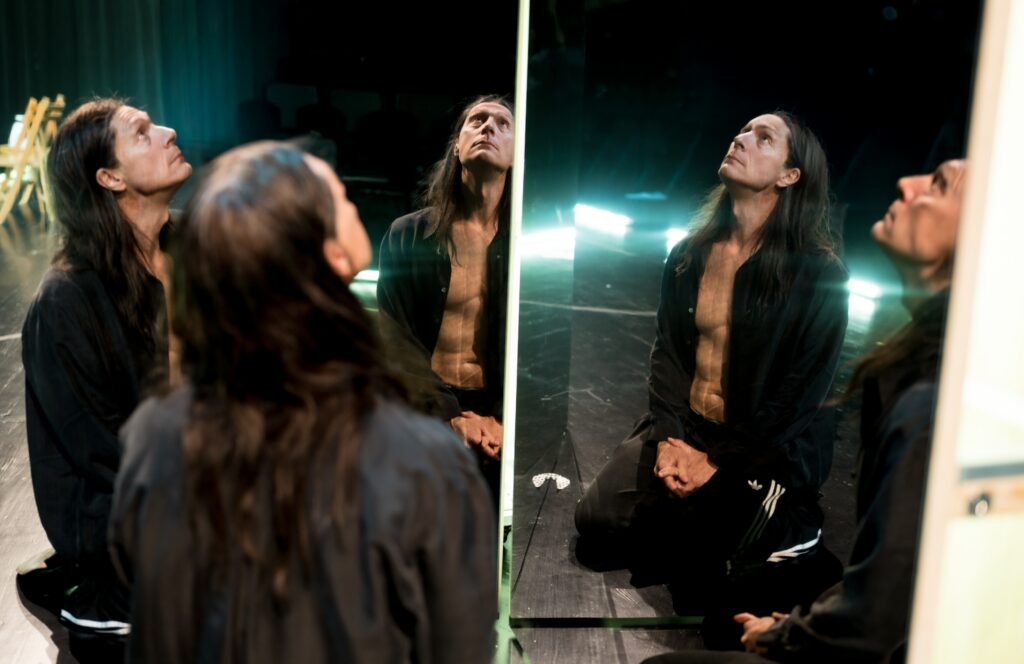
The critique of how fragile such a male ego can be is probably my favorite part of the show. This version of Hjalmar speaks to 2026, with “alpha male” influencers and social media figures like Andrew Tate and Myron Gaines convincing men that they are actually oppressed. This fictional oppression is something that is readily available to Hjalmar.
One of the most uncomfortable scenes is when he comes home from Director Werle's party and has forgotten food for Hedvig. It is relatively unchanged from Ibsen's original text, but Furuseth plays the role with this inedibly self-absorbed angle, where he places himself as a victim of the outside world. He talks throughout the play about all the responsibility he has, but we never see any of it, the only one we see working is Gina.
"If you take away the lie of life from an average person, you immediately take away their happiness"
When this line comes, it takes on a completely different meaning than in Ibsen's original. It is clear that everyone in the family, especially Gina, is walking on eggshells to indulge Hjalmar's fantasy of what kind of man he is. When the lie of life is broken and Gregers reveals the secret, Hjalmar is not a good man who was destroyed. Instead, only the intolerable sides, which he has barely managed to hide, are brought to the surface. The best quality of the performance is that it creates nuance in the play by allowing contemporary society and standards to meet Ibsen's text. I was surprisingly uncomfortable with the portrayal of Hjalmar in the play, and that has definitely stuck with me in retrospect.
Although the text is not particularly updated, the same cannot be said for the aesthetics. The director makes good use of mirrored walls facing the audience, before these slide up and into Ekdal's home, where the walls are covered in portraits. These aspects work well in themselves, but I generally miss some more holistic aesthetic thinking, when this meets the neon green costumes, the piano that plays itself, and the general creepy atmosphere that feels pulled out of Tim Burton's world.
Pulling The Wild Duck in this direction is not negative in itself, but the aesthetics contribute very little to my engagement with the text; the two aspects feel completely separate. The costumes in particular, despite being technically impressive and beautiful, distracted me much more than they gave me, and are the weakest point of the show. Everyone in the Ekdal family is dressed in hairy, neon green and black garments. The Werle branch is dressed at least as loudly in a contrasting pink. Gregers falls in the middle dressed in black and white, still extreme in style. The costumes themselves are coherent, and there are good details, such as Gina's outfit being emblazoned with the names of a number of champions of feminism, and Hjalmar wearing sweatpants under his suit. The maximalist style nevertheless contributes little to the action elements, which were what engaged me most with the show. Rather, the style becomes just noise in this context.
At times, the costumes also hinder the performances of this fantastic ensemble. The loud costume choices can easily overshadow how thorough the acting is. Everyone performs at the highest level, also comically. Hermann Sabado shines as always, he gives Gregers this boyish naivety that contributes well to the humor, but also to more painful moments, such as in meetings with his father. Jan Sælid is also hysterical in the role of Gamle Ekdal, and Mariann Hole gives a toned-down but intense performance as Gina Ekdal.
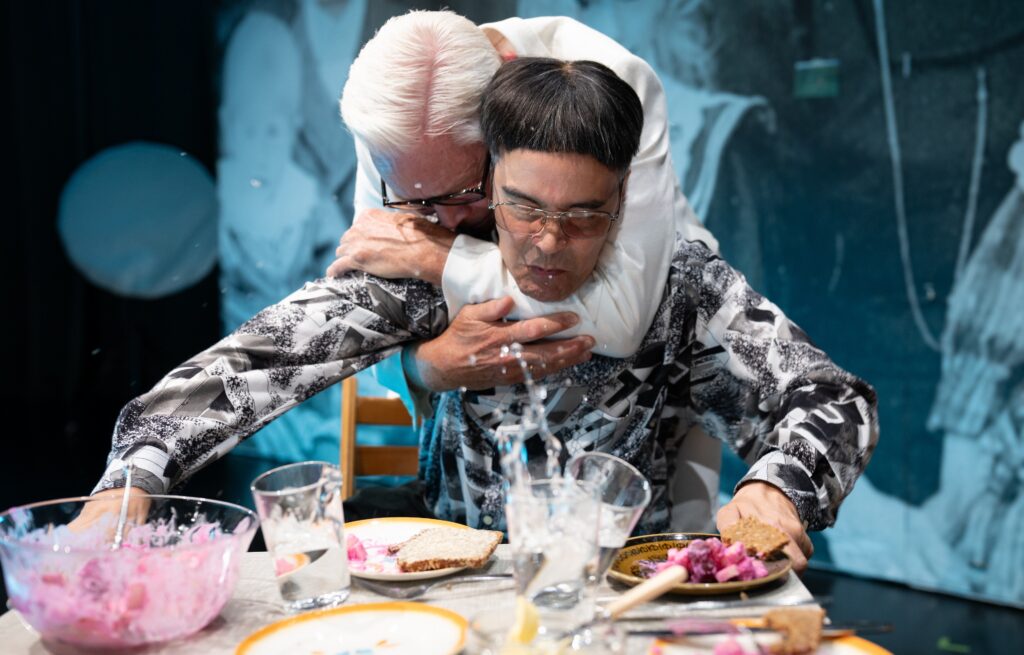
The performance is also very aware that most people in the audience are familiar with The Wild Duck. Hedvig's suicide is hinted at in a humorous way relatively early on. I thought it was nice to see that it wasn't pretended to be shocking; the openness allows one to focus on the new aspects of this performance.
Nora Frølich's version of Hedvig is perhaps the character that most closely resembles Ibsen's original version. She is Hjalmar's light, and loves him more than anything on earth. Interestingly enough, this also becomes more nuanced because this version of Hjalmar is so inedible.
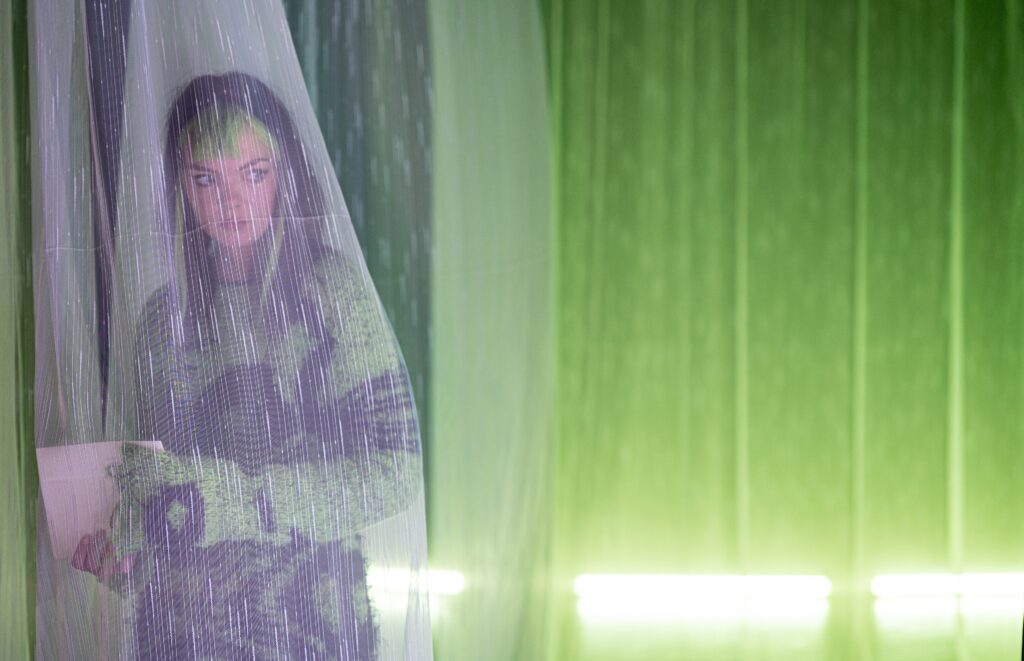
By the end of the play, Hjalmar is at his worst. He acts like a child, ordering Gina to pack for him since he has now decided to abandon both daughter and wife when it is revealed that Hedvig is not his. He has been passive and nasty to Hedvig, implying that she is now just a burden in his life. So while Hjalmar sits and complains about his dry bread, the shot comes.
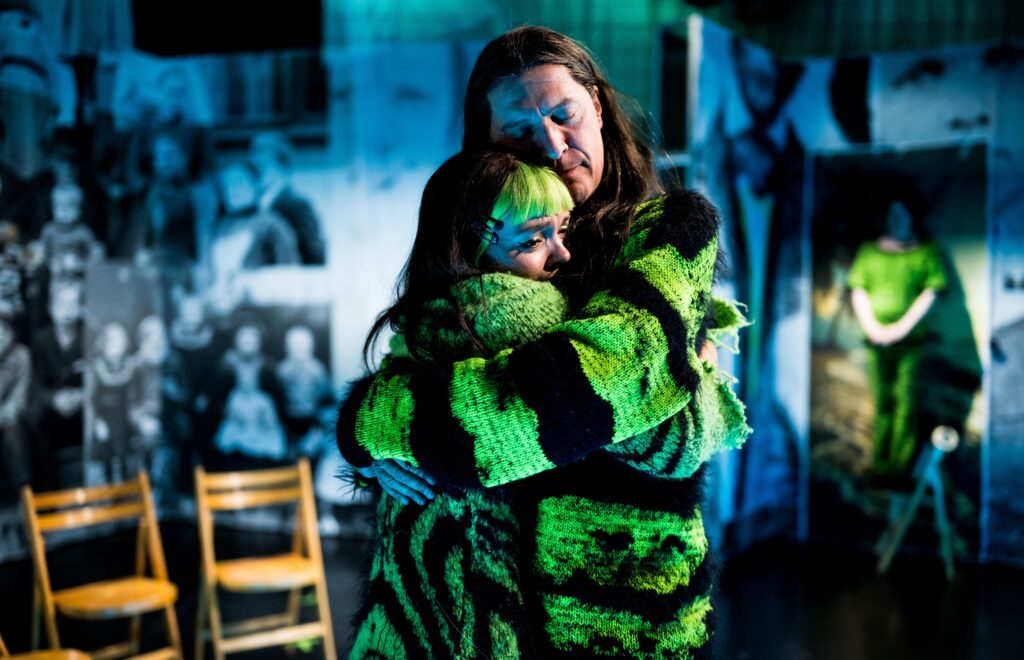
And sitting in the audience, I felt it resonate. The big difference from other times, I think, is that the play designates a scapegoat. In Ibsen's work, it is a tragedy, but Hjalmar in particular is relieved of the blame, it is more presented as an unfortunate accident. In the National Theatre's version, it is one hundred percent his fault. The punishment for constantly running away from responsibility for his own life is that he is now responsible for his daughter's suicide. It feels as if the performance is designed to lead up to this final scene. Small character changes, especially in Hjalmar, but also Gregers and Gina, create an extremely strong dramaturgical common thread, which finally makes the suicide a climax.
All in all, The Wild Duck is worth seeing. It builds thoroughly on Ibsen's original work and strongly addresses the times we live in now.
September 10, 2026
By Henrik Ibsen
Played at the National Theatre's Amphitheater
Director: Jan Bosse
Scenography: Moritz Müller
Costume design: Kathrin Plath
Lighting design: Agnethe Tellefsen
Composer and sound design: Arno Kraehahn.
With: Ola G. Furuseth, Nora Frølich, Mariann Hole, Herman Sabado, Kim Haugen, Jan Sælid, Yusuf Toosh Ibra and Birgitte Larsen.
All photos: Lars Opstad
September 7, National Theatre