Axel's little criticism crisis
What is the role of critics in the world of theatre? Aksel August has pondered this throughout the Hedda Festival – and life in general.
The balance between the chaotic and the controlled rests on trust, which Cirqus Hialøs impressively demonstrates through music, dance and circus.
As I enter the hall for the premiere of Cirqus Hialøs at Bærum Kulturhus, I see the performers singing a repetitive folk melody, many of them also playing fiddles. There is a warm welcome, as if they have been waiting for us, or as if we are witnessing their lives spinning and going even without an audience.
The performance is both a Skåne folk music concert, but also a circus performance where the balance between the chaotic and the controlled is always present. To the Nordic folk tunes, the circus artists perform acrobatics and circus disciplines, often using the air as a space for play.
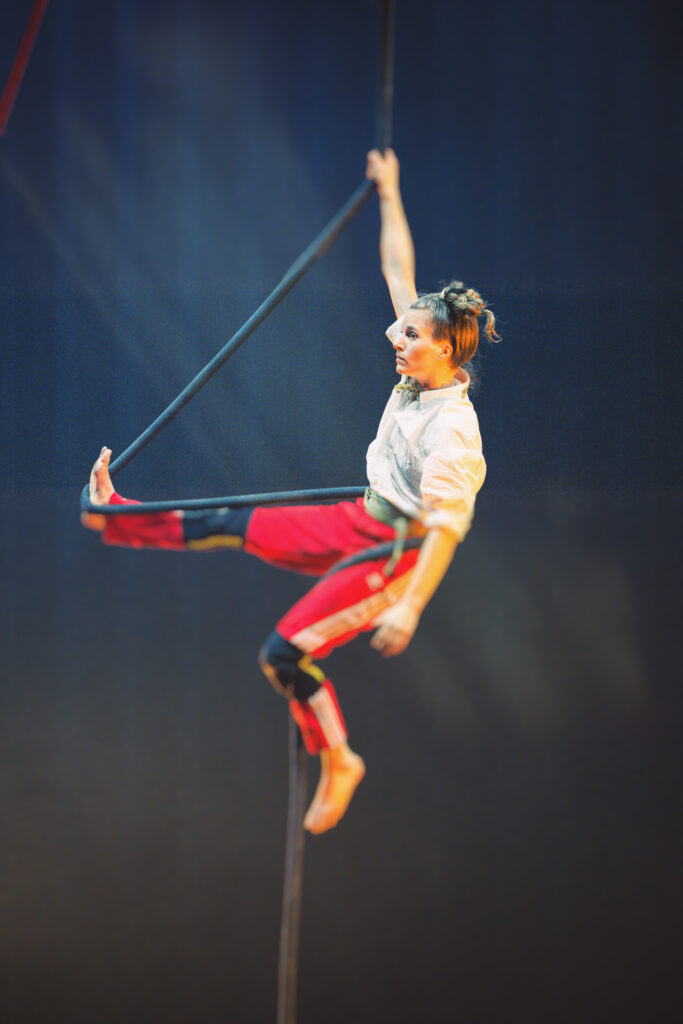
Circus has been a big part of my life since I was little. I grew up in a world where anything is possible. Where there are no limits to what you can do on stage. I have seen the aerial acrobat climb to the top of the tent, the clown split into a giant green balloon, Fantastic Mr. Fox talk about the importance of protecting animals and I have seen Jesus walk on Lego. The creativity that pulsates through new circus has kept me awake and inspired me. Through new circus you can convey something very special that I believe is not the same in other art forms.
Another thing that fascinates me about new circus is how much trust you have to have in each other. You have to be able to trust the others. You have to know that the person holding the rope won't let go, that the base won't kneel, that you won't slip and that they'll catch you when you fall. Trust is an important element in any performance, but when you have 8 people on stage, each doing their own thing, trust is a vital factor.
Behind the performance Cirqus Hialøs is the artist collective ENT and the performance is based on the musical trio Hialøsa 's interpretation of old Skåne folk songs. The sound image therefore consists mostly of fiddles, double bass, vocals, and a lot of rhythmic stomping. In addition to this, keyboards are used to add a modern twist to the old folk music.
Throughout the performance, the musicians are used almost as climbing frames by the circus performers. They stand like pillars, while the circus performers squirm, twist and climb up their bodies. They are not just a band that plays live to the circus performers' movements, but are an active part of the performance, which makes it very unique.
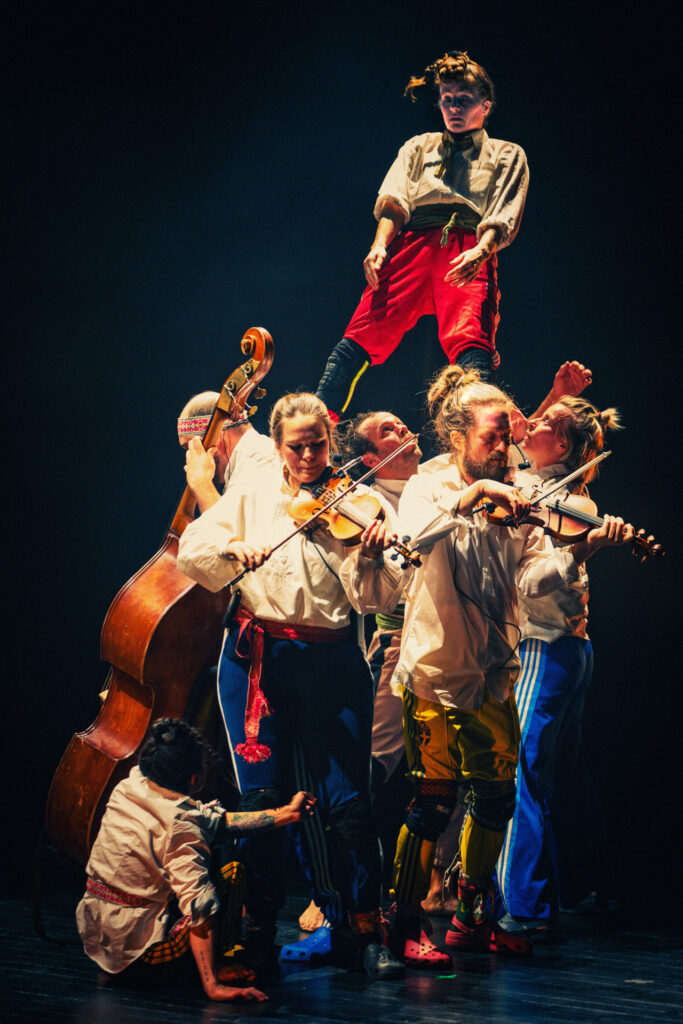
In the post-show, two of the performers told how they worked on the performance. They have all been given one hour each where they decide everything. For example, one of the circus performers can decide that everyone will do acrobatics for an hour, even the musicians, and vice versa when someone else is in charge. They then try to incorporate elements from everyone and create a performance together. This has meant that there is a nice balance between the music and the acrobatics, where all the performers do a little bit of everything, whether it is the circus performers singing or the musicians acting as bases for the flyers. This also creates a good sense of unity on stage, which rubs off on the audience.
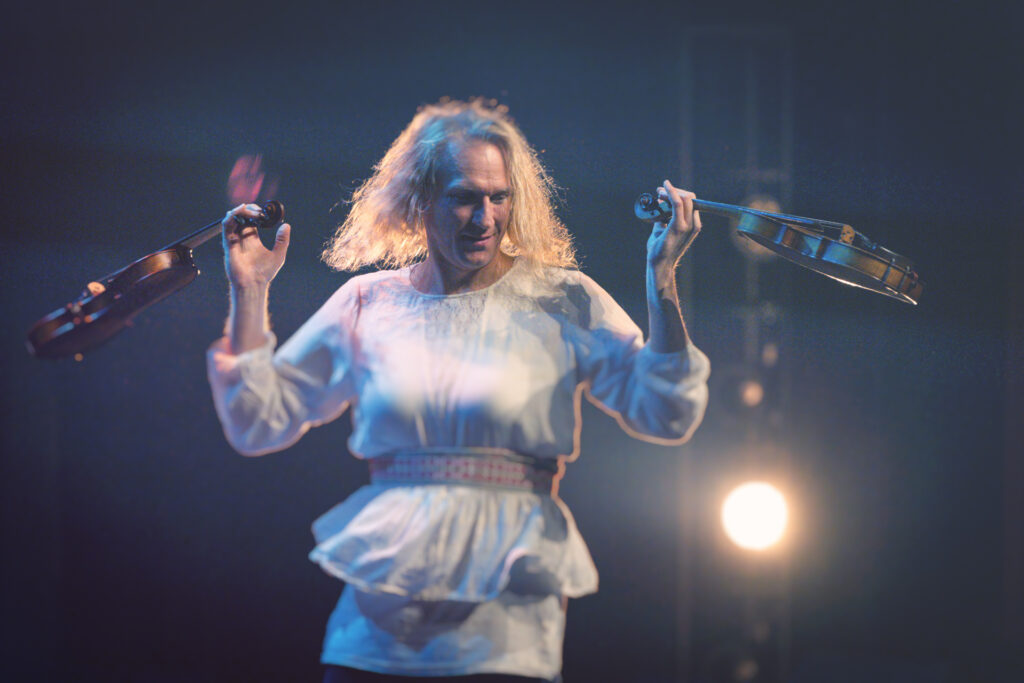
In several of the scenes, the musical instruments are used as circus equipment, an example is when two fiddles are used as two poi. Poi is a discipline in which one swings and creates patterns with one or more units, often heavier at the end. The fiddles are swung over the performer's head. This is a creative twist on a traditional discipline that fits well into the rest of the performance.
Another example of this is when one of the performers climbs onto the double bass, which is then lifted up by the others, while the performer stands on top. It is then suspended from the ceiling by two straps. While the musician plays the instrument, the performer dances on top of it. The whole thing becomes a nice fusion of circus and music. Perhaps this is precisely what circus is all about: fearlessly mixing elements and stretching creativity to the limit.
In the music and movements of the performers you find life, while behind every graceful exercise lurks death. One misstep, one sudden movement, or the rope one turn too short around the waist and the artist falls headfirst to the stage floor. The performance highlights the delicate balance between life and death. The dance between mobility and deadly immobility.
The musicians also keep alive old Skåne folk songs that might otherwise have been forgotten. The same goes for the circus artists who keep alive long traditions of moving the body to music and disciplines such as tightrope, trapeze and hair hanging.
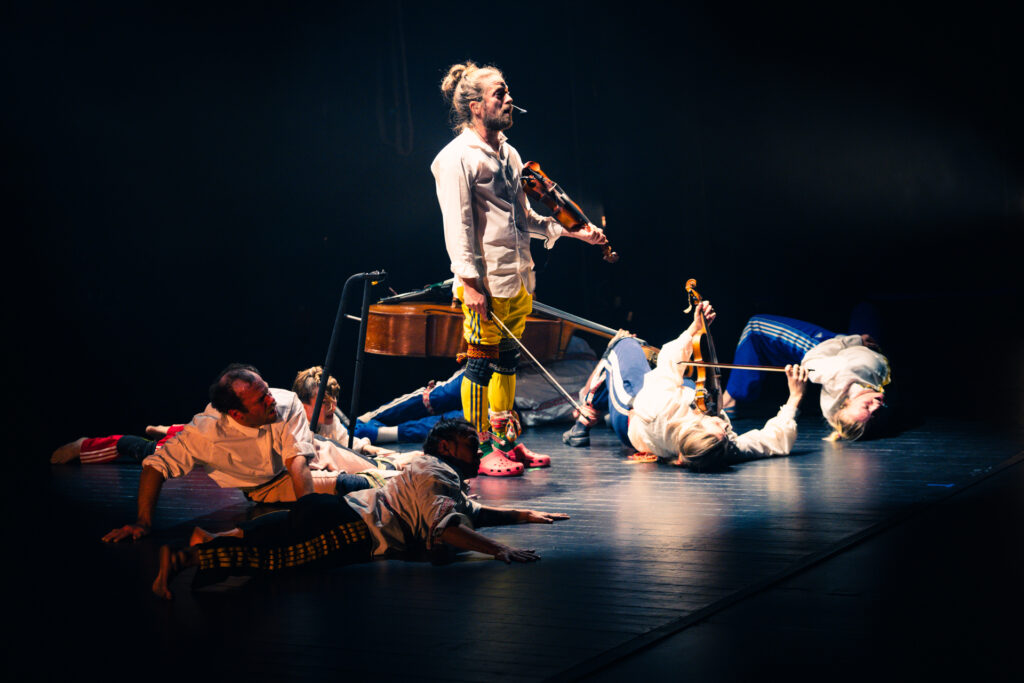
Both circus and folk music have a long tradition of borrowing and being inspired by other cultures. Perhaps this is precisely their tradition; borrowing, being inspired, adding something of their own, changing. In the performance Cirqus Hialøs , the music is inspired by the acrobatics and the acrobatics are inspired by the music, they borrow from each other and together create an untraditional combination. But perhaps the tradition is not about preserving it as it has always been, but precisely about bringing it forward. Let it live.
Through performances like Cirqus Hialøs, circus traditions that would otherwise have died out are kept alive. Circus is an endangered art form with a small community compared to theater and dance, especially in Norway. Perhaps this is the way to preserve it.
November 25, 2025
Artistic director and on stage:
Malte Zeberg, Alva Bosdottir, Simon Wiborn, Lalla Øverland La Cour, Love Aamås Kjellsson, Methinee Wongtrakoon, Karoline Aamås and Andreya Ek Frisk.
Other artists who have contributed to the process:
Methinee Wongtrakoon, Anna-Katharina Andrees, Hallgrim Hansegård, Mira Leonard and Ester Thunander.
Photo: Tomas Lauvland Pettersen / Bærum Kulturhus