I wanted to dance along!
This concert is music, dance and theater all in one. Many of the dances are still in my body.
Henrik Ibsen's play Hedda Gabler has absolutely horrific themes and characters. But the Norwegian National Ballet's execution and communication of it as dance was absolutely brilliant!
Let me start with the beginning. A young Hedda Gabler (played by Sara Bringebøen Jensen, somewhere between 8 and 12 years old, I would think) confidently steps onto the stage alone; she is in complete control, walks with her nose high in the air, is elegant, while she learns to shoot from her father (Kristian Alm). A very strong and cool start to a very strong and cool piece.
The ballet is based on Henrik Ibsen's play from 1890. The play itself is about Hedda and her husband, Jørgen Tesman (Martin Dauchez), and the people in their lives. When the play starts, Hedda is quite depressed. This has developed especially in the last 6 months, after she got married and, in her eyes, lost her freedom. The play follows her choices as a person with flirting, bullying, grief and much more. Among other things, she is raped, bullies another woman (in my eyes for 0 reason) and ends up committing suicide.
The part I liked the most, and where this performance differs most from Ibsen's text, is that there is so much young Hedda. Director Marit Moum Aune has made young Hedda a separate character in the play and we see how Hedda was as a young woman in stark contrast to how she is as an adult (played by Grete Sofie Borud Nybakken).
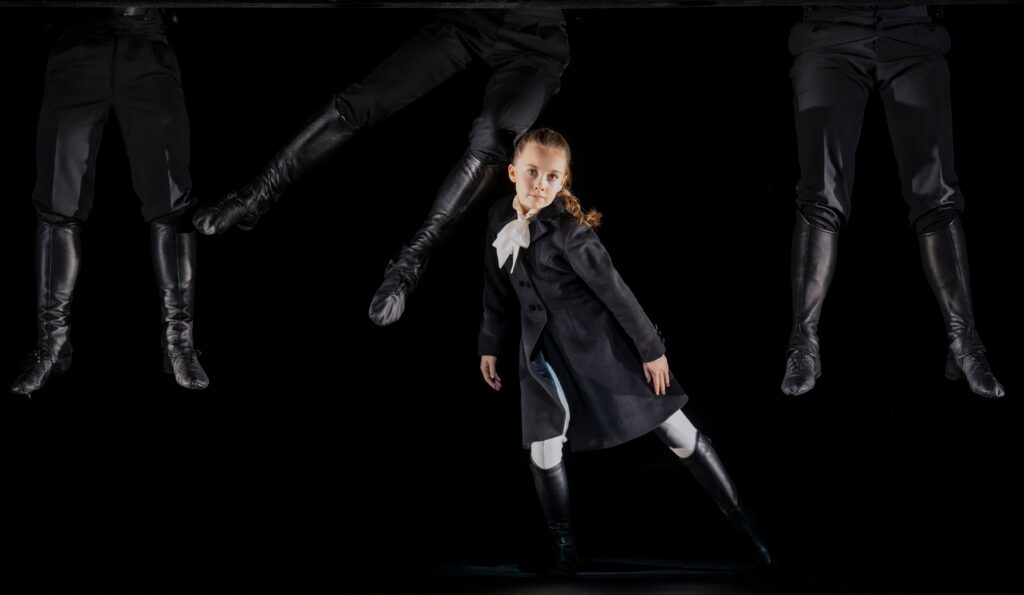
There are generally really good young dancers from the Ballet School who, together with Jensen (the young Hedda Gabler), were in my opinion very necessary for the story. Namely, drawing her in a strong figure before she became, well, different anyway... They build a big contrast between who she was as a child to who she is as an adult; still determined, with her nose straight in the clouds, but something has changed. She is more sad, empty and has lost some kind of spark.
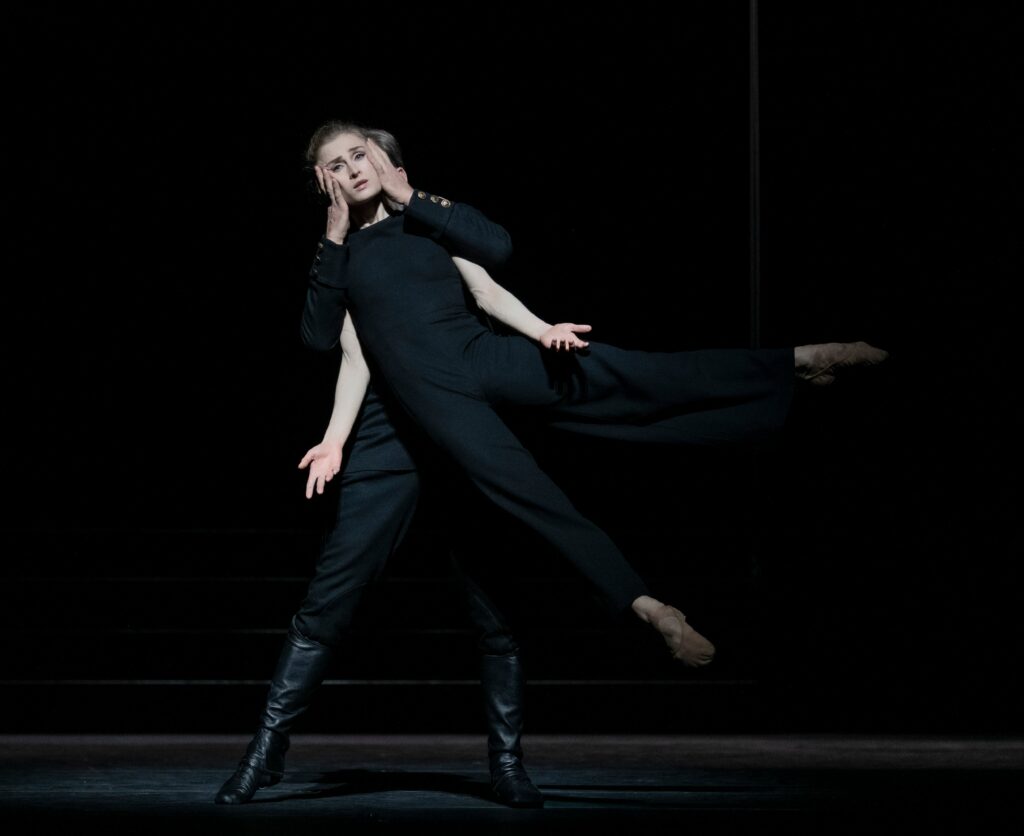
I was generally very impressed by all the dancers. They did an absolutely fantastic job. I don't know what to call them, they were definitely ballerinas with their dancing and strong bodies. One scene that sticks in my mind is when adult Hedda and her 3 Love interests (Douwe Dekkers as Eilert Løvborg, Martin Dauchez as Tesman and Erik Murzagaliyev as Assessor Brack) dance. Then she is so strong, she reacts to each of them with everything from desire, disgust, kindness, sadness and much more. The scene is so defined, but still so alive. More specifically, there is a scene where she is in a way physically passed around from man to man. The way they do it is so elegant, they must be damn strong! And she must have absolutely insane body control! But the way they conveyed emotions was so strong and secured into movement, muscle and action.
The character is well written by Ibsen, but Nybakken's presentation – without words, just with body and a very vivid "dead" face! She is very good at contrasting her more vivid/cheerful face and her very empty/depressed one – it is absolutely incredible to watch, and it makes you get much more sucked into the play.
Death was played out in a very cool way in the form of Aunt Julle (Gina Storm-Jensen). Several times along the way I thought the dancers were actually dead in some scenes where they have hollow cheeks and big, white eyes.
The set design was also really sick: There was furniture hanging from the ceiling that was lowered and raised again diligently. This, plus a kind of boxy floor, is particularly fascinating to me as I study automation in high school and am very curious about the mechanics behind it. In one scene it almost seems like the furniture is dancing as it goes up and down at its own pace and never touches the ground, I think they solved this with some very solid servo motors and strong cables. But back again, it was also really sickly impressive, especially considering that it was a whole huge stone fireplace that was lifted up and down.
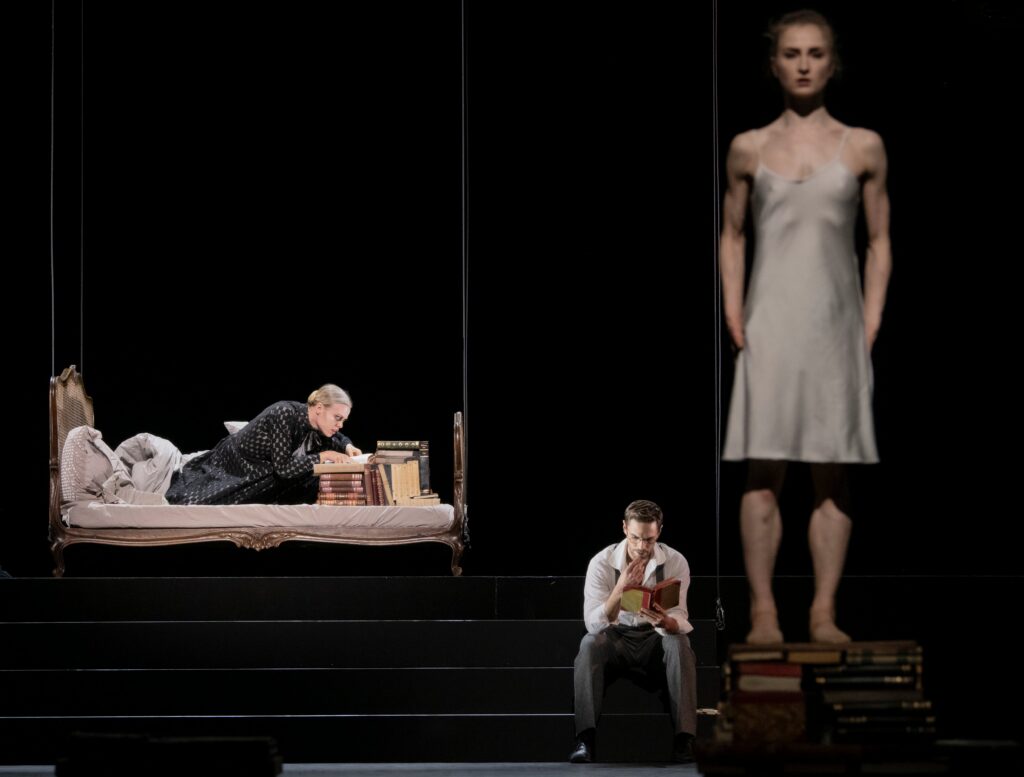
I also noticed that the dancers did not wear classic pointe shoes, but instead wore some form of socks or dance shoes. Otherwise, the costumes seemed to be period-appropriate enough, and with extremely good danceability. The costumes were not always on then. Quite early in the performance, Hedda Gabler takes off her clothes completely, and personally it was a shock element. But I think it fit and gave a form of depth and opened up, in my opinion, interpretation in three ways:
And basically, this scene was also the transition between a “happy” Hedda and a “sad” Hedda.
At the very end of the performance, there is a rape, which is the trigger for her suicide. This scene became very powerful and very relevant in view of the debates that have been going on lately about sexual assault, more specifically the “ consent law ” that was introduced last year, where anyone “who has sexual intercourse with someone who has neither consented to it in word nor deed, is from today affected by the criminal code’s provision on rape”. The scene felt particularly powerful considering that no one can say that it must not have been cruel. I would also like to say that I am very impressed with the two dancers who together created such a powerful scene and that it is completely sick, almost inhumane that they managed to do it so well. But at the same time; is it inhumane? It happens, many, many times a day, it happens to our fellow human beings.
February 19, 2026
Direction and choreography: Marit Moum Aune
Choreography group scenes: Kaloyan Boyadjiev
Music: Nils Petter Molvaer
Scenography: Even Børsum
Costume design: Ingrid Nylander
Lighting design: Kristin Bredal
Participating: The National Ballet, Nils Petter Molvær, The Ballet School
All photos: Erik Bergn / The Norwegian Opera and Ballet
The Norwegian Opera and Ballet, February 7, 2026