
"Just a show," yet so real
A performance where the distinction between acting and reality disappears for a few hours, goosebumps rise and all the senses are triggered.
“Elva” is a walking performance that describes the lives lived along the riverbank in Oslo, about drug abuse, robbery, murder, too little love and too much. And not least about the river god Akeris, who gives and takes.
“Elva” is written and partly directed by Numa Edema Norderhaug. The performance is based on his own youth along the riverbank in Oslo, what happened there, why one ended up there and what it led to. Throughout the performance we follow Akeris on his journey to retrieve lost souls from the streets of Oslo. We meet four of these souls. Yamal, Thea, Sander and Jonas. But the main character is and remains Norderhaug himself; the narrator.
The performance begins right at Nybrua in Oslo, where we are each given a set of headphones. The instructions are simple, put them on and follow the cobblestones along the road behind the audience host. As soon as you put on the headphones you can hear birds chirping and the water flowing in the river below: This is the Kingdom of the Rivers.
We hear the whole story, the background sounds, the music, the narration and the lines. The first character we meet is Akeris, the river god, who traps souls along the riverbank into a hard life of addiction, or freedom as he describes it. He tells of young boys who need help, guidance, quick money. His gestures and body language spread over every muscle, repeating the same thing we hear, without him saying a word himself. Under the bridge, the portal to the “Elf Kingdom”, the pigeons sit close to the ceiling, and Akeris is right, the air really is thicker down there.
The fact that we get all the sound through headphones makes the whole performance feel more personal. It's like they're talking directly to you. I almost forget about the audience and random passersby, I get completely absorbed in the stories, the sounds, the movements and the costumes.
The costumes of the actors are one of the first things I notice. They are well-made and reflect the story, the environment and the characters in an incredibly good way. Akeris is the first character we meet, his clothes make it look like he has just stepped out of the water. His cloak is like the river that flows down his shoulders and all the way to the ground and it is covered in patterns. These patterns can also be found on the other characters' costumes. They are marked by Akeris.
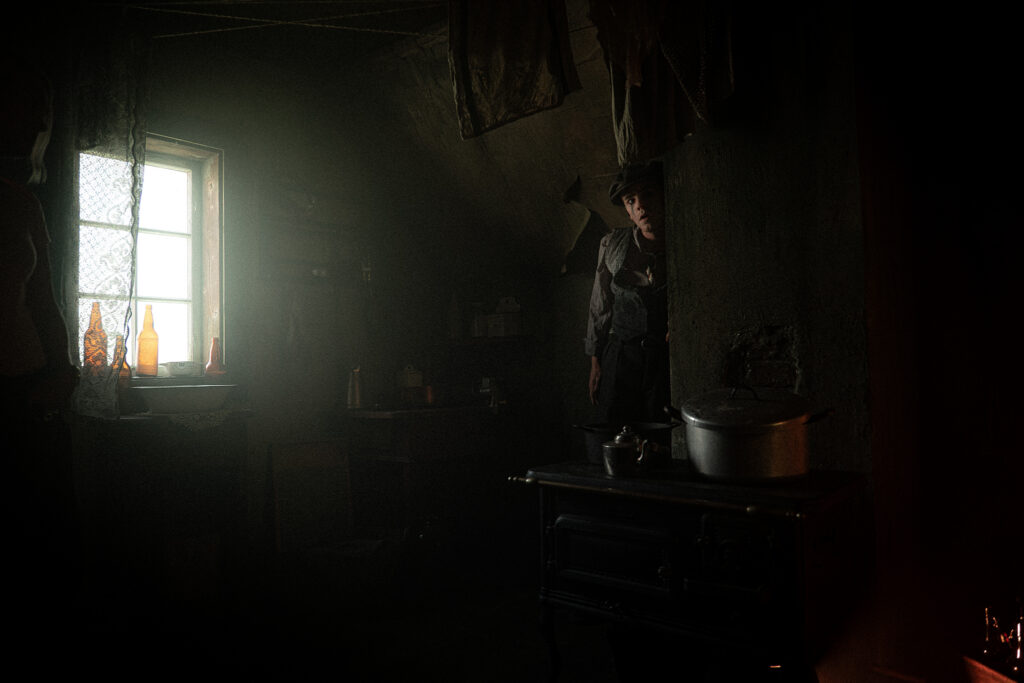
We move from the river and up to a container. As we enter the doors it is as if we are stepping back 100 years in time. The container is decorated like an old work barracks from the 1920s. The lighting is dim and the floor tiles look worn and worn. Life by the river is not a new phenomenon, the history of the work barracks shows that the river has been a place to forget for a long time, a place for poor people. In the barracks there is someone sleeping, he wakes up and staggers until he is standing in the middle of the floor, then it is as if he really wakes up. A voice tells of a father who is only home once in a while, when he is not home he drinks, is dragged away by the police after a fight, or he hangs out by the river. There is only one person in the barracks, Sindre Slorafoss, but the way he moves around, imitates what is being said and relates to the people who are not there, makes it seem as if they are all there, both the mother, the father and the son.
Suddenly there is a knock on the door. Akeris enters. His shadow folds up the wall and shadows the boy in the barracks. Akeris hands him a coat, pushes him out into the world, and he follows. The boy and the river god Addiction.
“In the late 90s, I changed in step with the souls around Elva. These souls had different ancestors, believed in different gods, spoke different languages, but the prerequisites were still the same,” says Akeris.
Outside, Yamal, played by Michael Schøyen, and the barracks boy Jonas are leaning against each side of a tree. In two different times, they are up to their ears in the same problems and find the same way out. The river. The boys find a unity among their peers. None of them has had a steady and present father, or father figure. They became each other's dads. They joke and laugh about how embarrassing it is to see their father drunk in a ditch or among friends at Anker, how pathetic it is to listen to their mother crying at the dinner table. No, then they are rather high along the river with good friends who always stand up for each other. Because they do, stand up for each other. Always. They learn from each other, they go to each other when things get tough and they celebrate with each other when things go right. They have each other, nothing else. I almost envy the unity they have and feel like laughing with them when their laughter echoes through the headphones.
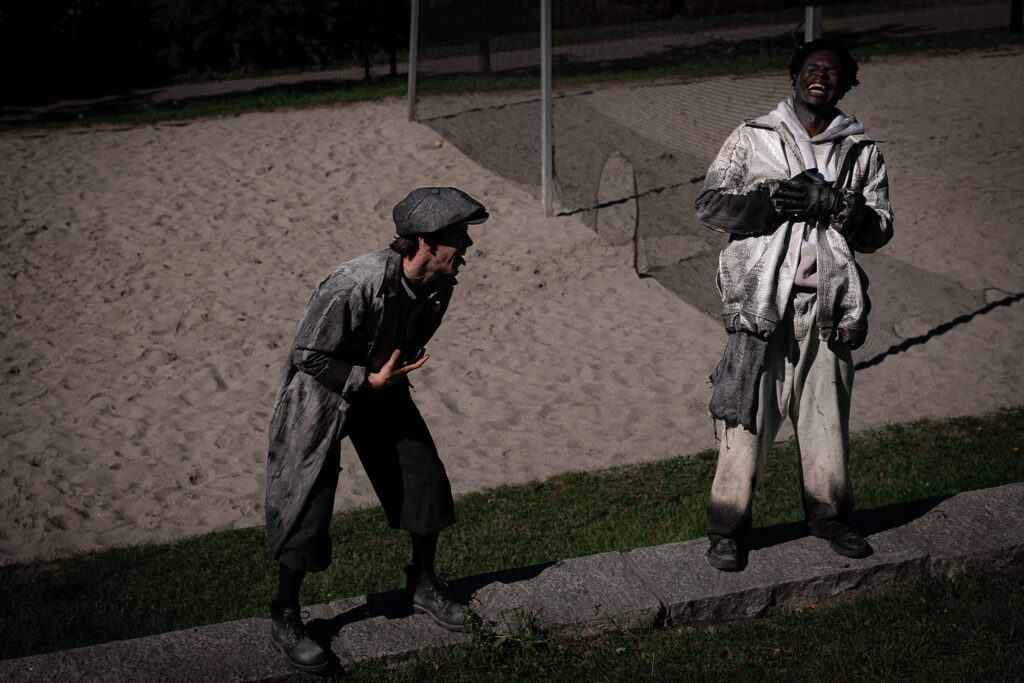
I feel like it's not often you see this representation, this unity, the show doesn't use the usual and flat "drug addict clichés. The show encompasses five lives and then some, it shows the ups and downs, shows where, how and why. The show has a depth that gives understanding and compassion.
As living proof of what the performance describes, the strong smell of hashish can be smelled as we walk along the road towards Hausmans Bro.
The stretch from Nybrua down to Vaterland has been and still is a crime and drug-ridden area. The fact that the show is played here and is about the people who hang out here, I think helps to loosen some of the prejudices associated with the place. The show lures people to a place that perhaps many have been afraid of and makes them see what the “river people” see; that the river really is fantastic. I myself did not know how troubled this place is and has been and therefore did not have any negative expectations of the location of the show, and I am no more afraid of the area after having been there now.
Since this is a walking performance, everyone who is in the room, whether it is to watch the performance, go for a jog, on their way to a friend's or to hide under a tree to smoke, all become part of the performance. They are basically what the performance is about. It is important that they feel included and that they too have a place on the theatre stage, both in that the stories are told and that they feel seen. While we stand around the bench that Yamal and Jonas are sitting on, two others are sitting on the bench directly beyond. They are following the two actors just as intently as we in the audience and it doesn't take long before Numa Edema Norderhaug gives them each a headset. I find myself glancing over at them from time to time, and while the actors talk about missing father figures and unity, it looks like tears have welled up in the older lady's eyes.
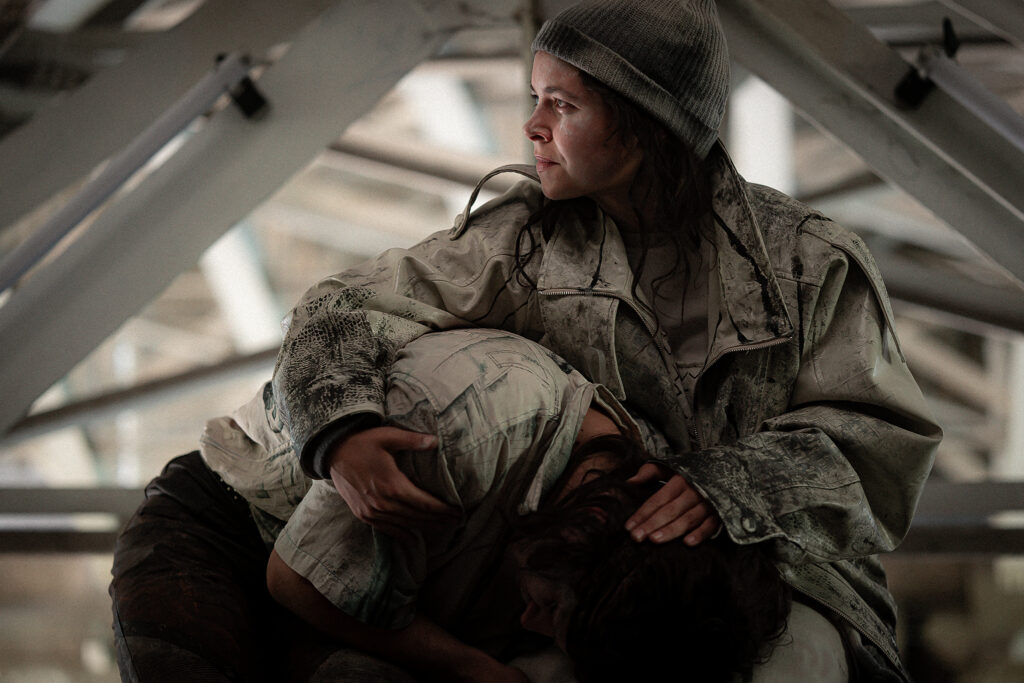
“Elva” gives and takes. It gives you insight into a world that I think most people know very little about, it gives you chills at how malicious and terrible addiction is, but at the same time it gives you a form of envy of the unity, loyalty and freedom that those by the river experience, it gives you a feeling of standing outside looking in, but also of being part of it all, it gives you goosebumps and a walk along the river. But what does “Elva” take? I think “Elva” takes a form of innocence from the audience. You can’t just look down at the ground and walk past easily like good Norwegians, you are forced to see, to hear and not least to understand. In any case, give it a try. I think “Elva” is an incredibly important performance that shows a brutal truth in a beautiful way. The river is like an intoxicant, it washes away all the bad; but it hits back with something even worse. I hope “Elva” never stops playing.
"It takes a strong back to walk with dignity through abuse. I wish we would stop using the term 'society's weakest'. In reality, some of them are the strongest among us."
– King Harald's New Year's speech, 2008
September 5, 2026
By: Numa Edema Norderhaug
Directed by: Numa Edema Norderhaug and Hilde Brinchmann
Choreographer: Amisha Kumra
Set designer: Signe Gerda Landfald
Costume and mask design: Helena Andersson
With: Jacob Vigeland/Gaute Adela Cudjoe, Michael Schøyen, Ella Bothner-Bye, Sindre Slorafoss, Toivo Ty Terjesen and Numa Edema Norderhaug (narrator).
All photos: Morten Quist Hommersand
Set August 29, 2026